Photo Essay: 25 Seasons of Rice-Eccles Stadium
11/3/2022
In some ways, you could say the new era started on June 16, 1995.
It wasn’t just any Friday morning in Salt Lake City. The third bid was about to become the charm.
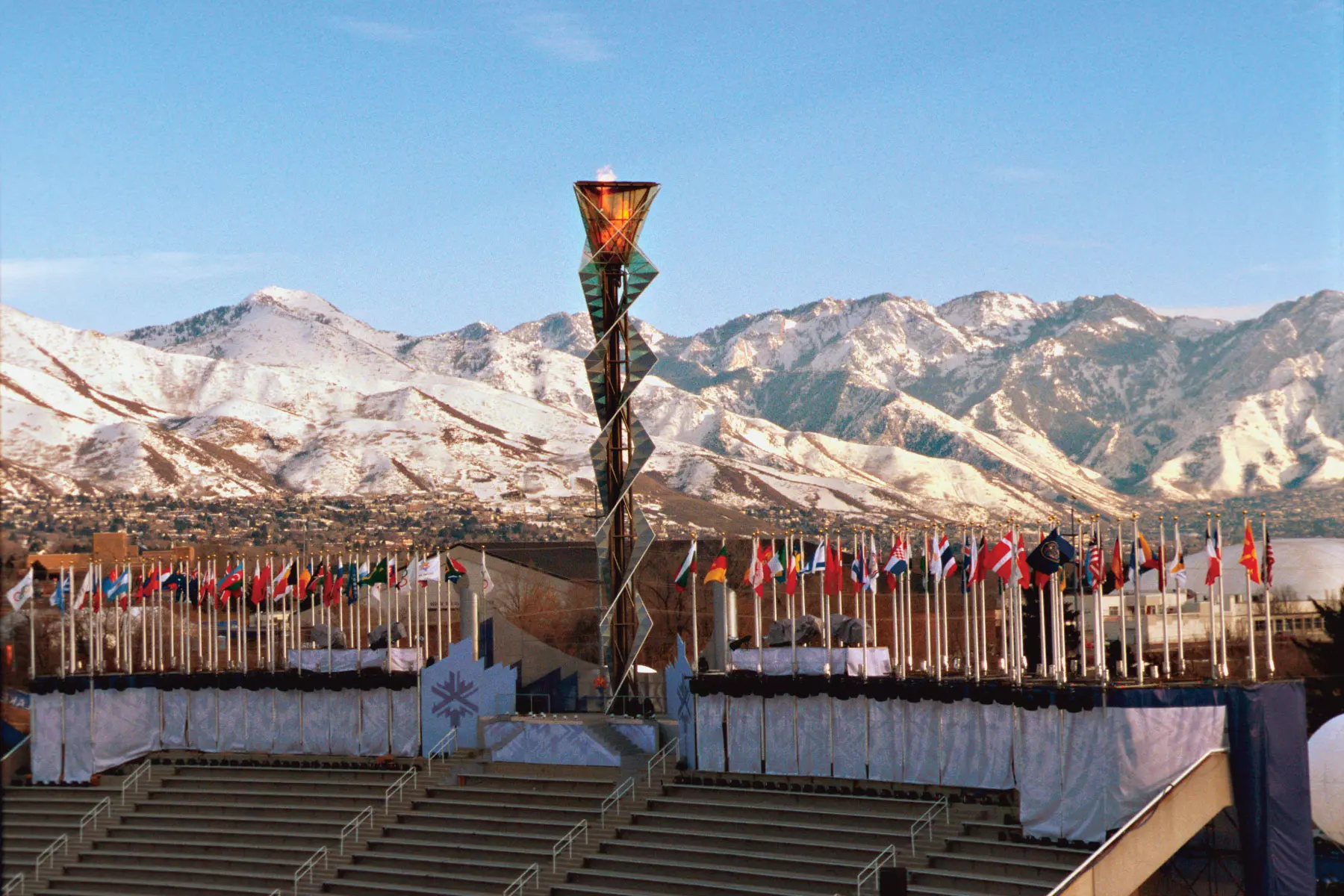
Halfway around the world at the 104th IOC Session in Budapest, Hungary, the news became official: Salt Lake City, Utah would have the honor of hosting the 2002 Winter Olympics. The world was coming here, and people gathered en masse in Salt Lake’s Washington Square to celebrate.
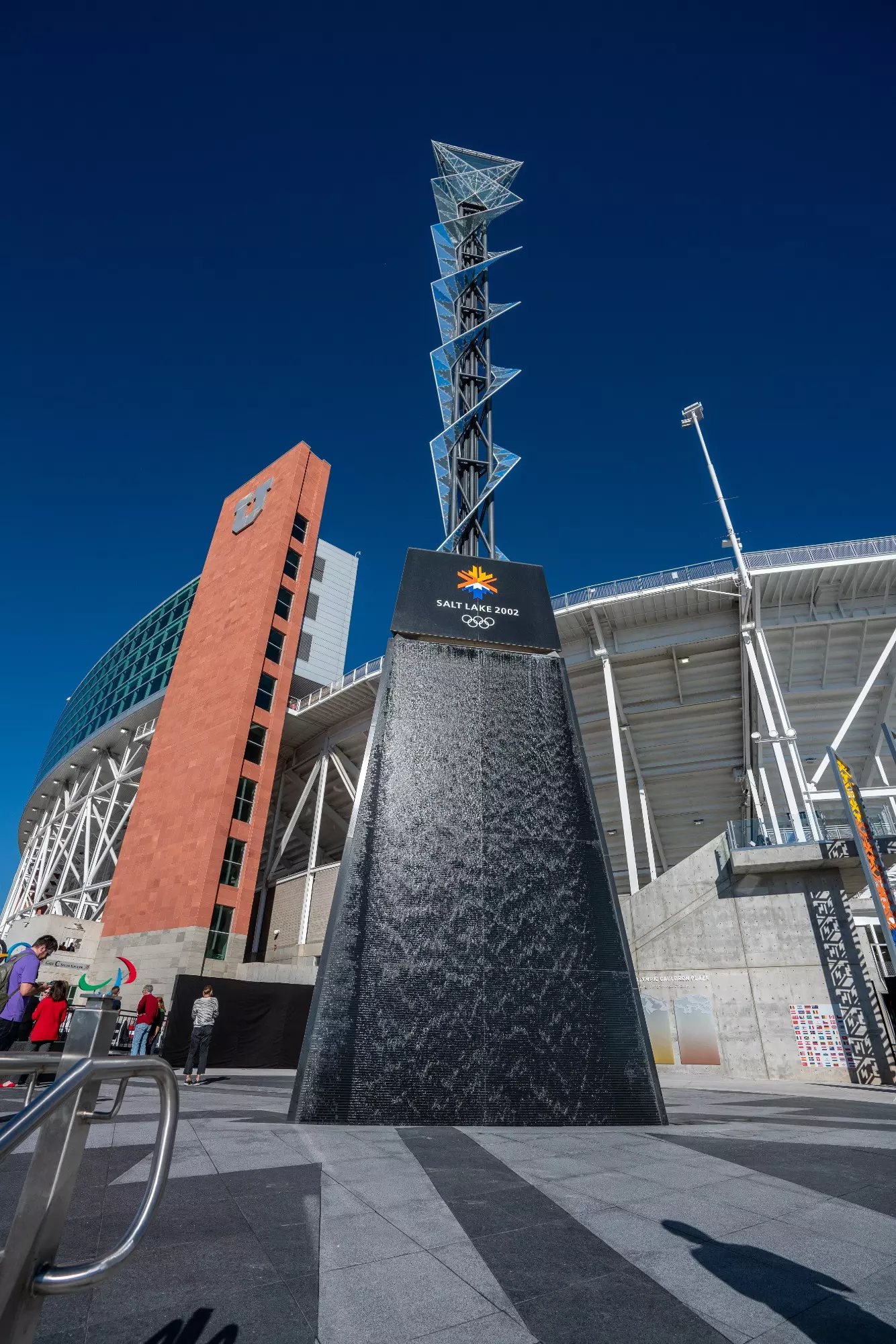
Honoring the Foundation
A couple miles up 400 South, the Utah Football team was coming off a 10-win season and trip to the Freedom Bowl—in fact, the ’94 season saw Ron McBride’s Utes post a perfect 5-0 record inside Rice Stadium.
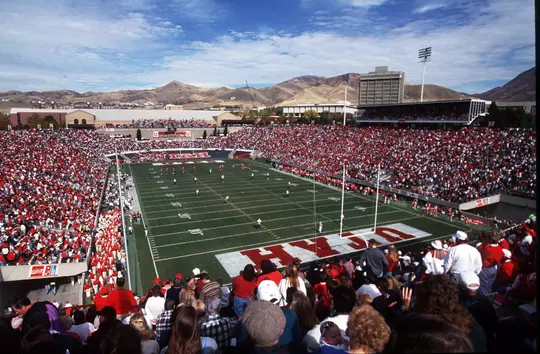
Utah had called Rice its home for nearly 70 years—opening as Ute Stadium in 1927 and being renamed in honor of Robert Rice in 1972. Generations of Utes fans had come through the turnstiles and walked away with memories. But as time went on, it became apparent that a new facility was needed. Not only was the football program starting to make national noise; the clock was ticking toward the 2002 Opening Ceremony.
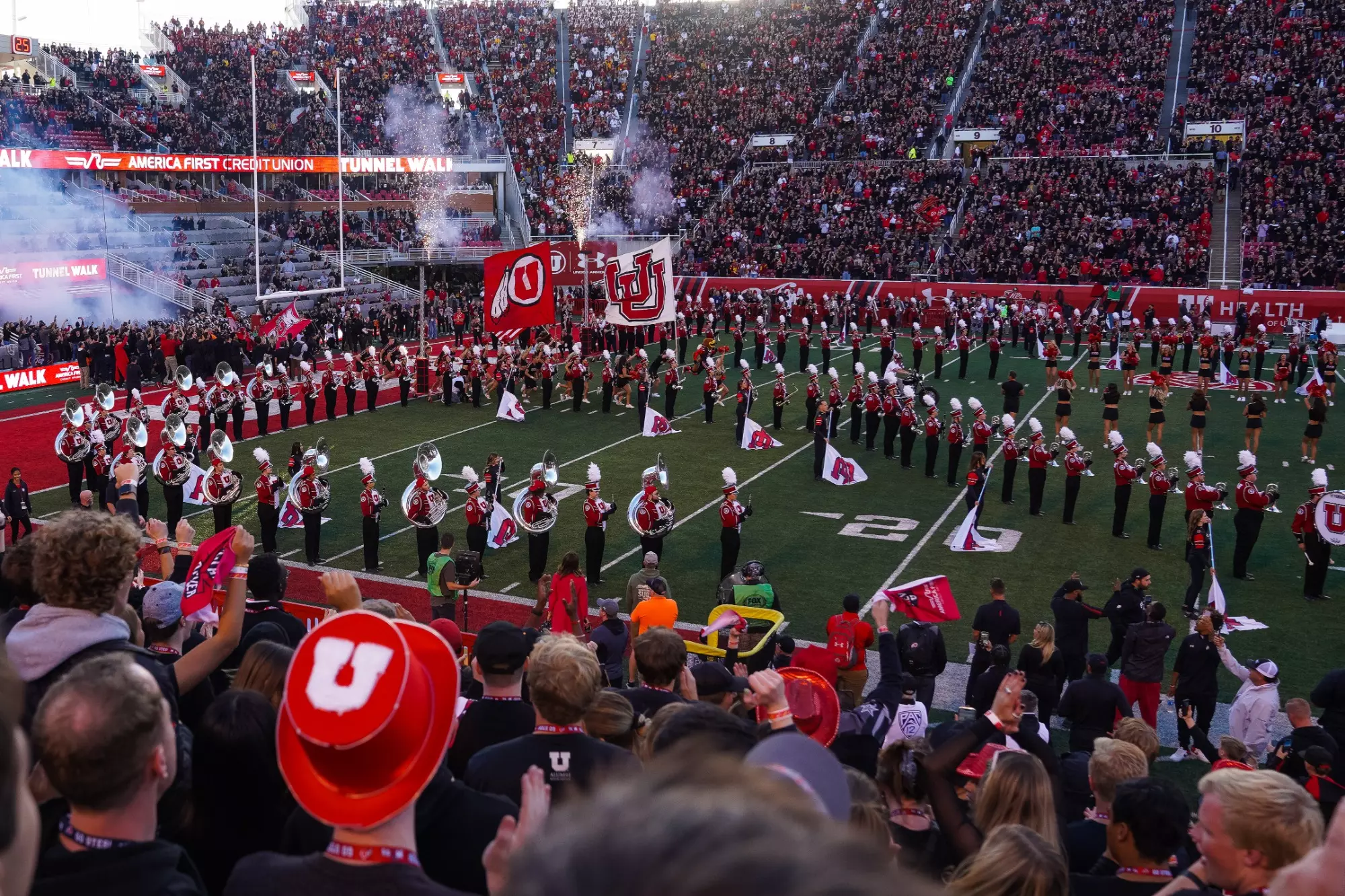
Which brings us here. As the Utah football program hits the home stretch of its 25th season of playing inside Rice-Eccles Stadium, it’s time to take a look through the ever-growing photo album and celebrate a quarter-century of the facility that has become one of the toughest places to play in college football.
A New Chapter Begins
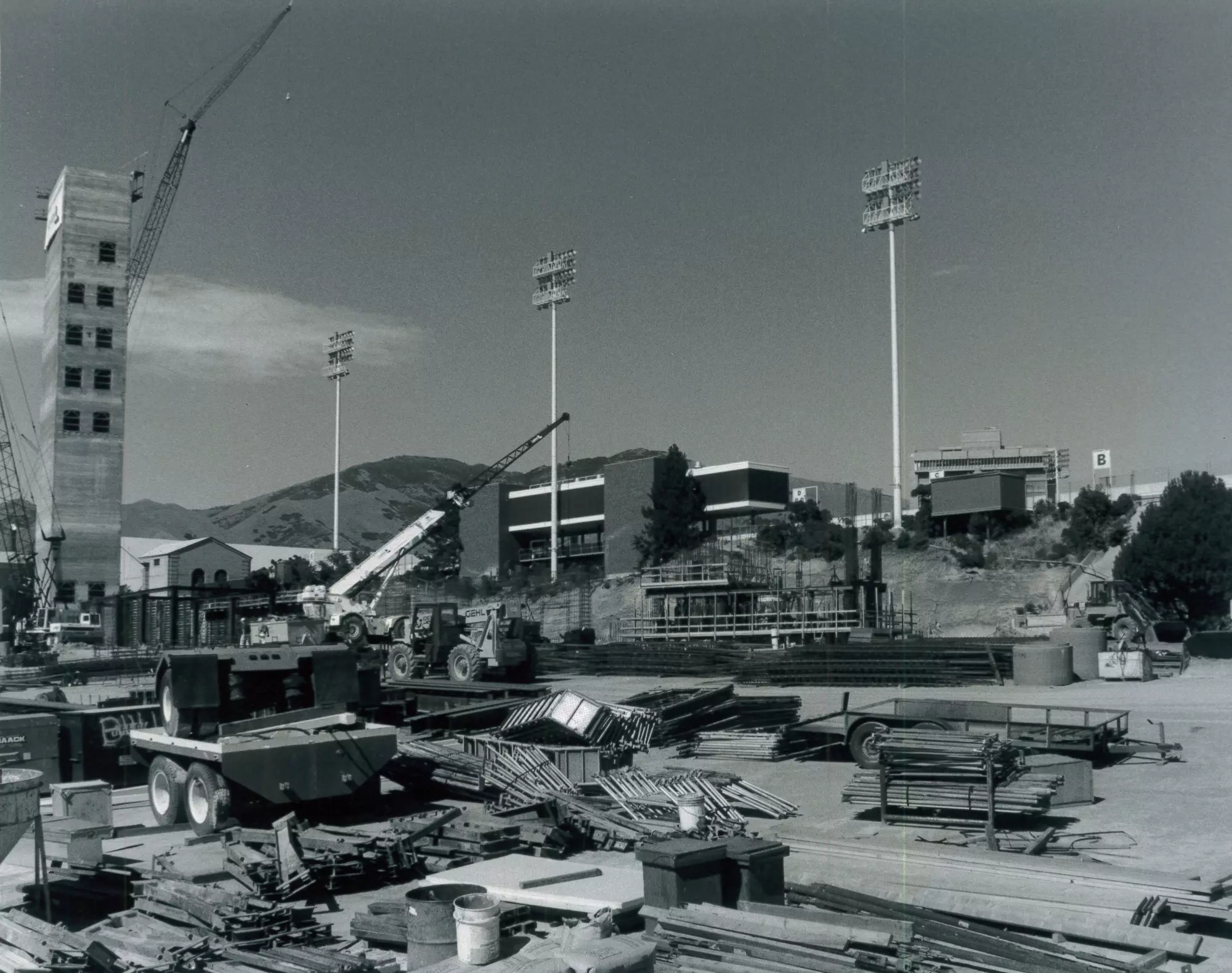
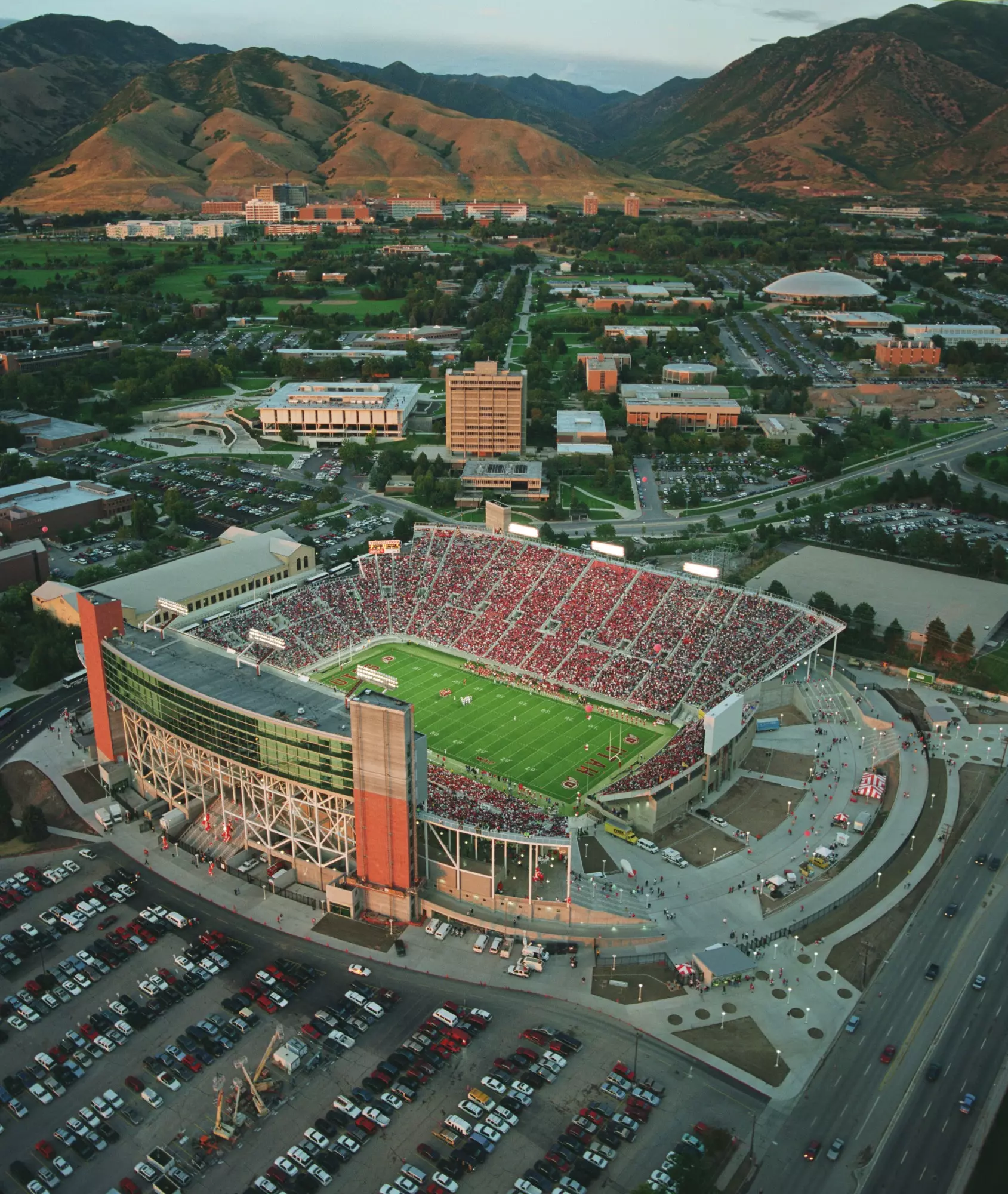
Fundraising for what is now Rice-Eccles Stadium began in 1996 and was boosted by a $10 million lead gift from the George S. and Dolores Dore Eccles Foundation, steered by former Ute All-America skier Spence Eccles. Preliminary construction work began in Summer 1997. Two days after the final home game that fall—coincidentally, a win over Rice—wrecking crews moved in and demolished Rice Stadium. Rising from the rubble less than 10 months later was Rice-Eccles Stadium, an imposing concrete, steel and glass edifice that dominates the Salt Lake skyline to this day.
On Sept. 12, 1998, a then-record crowd of 44,112 witnessed a ribbon-cutting ceremony and a 45-22 Utes victory over Louisville. It was the first of what currently stands as 110 home wins since the facility opened.

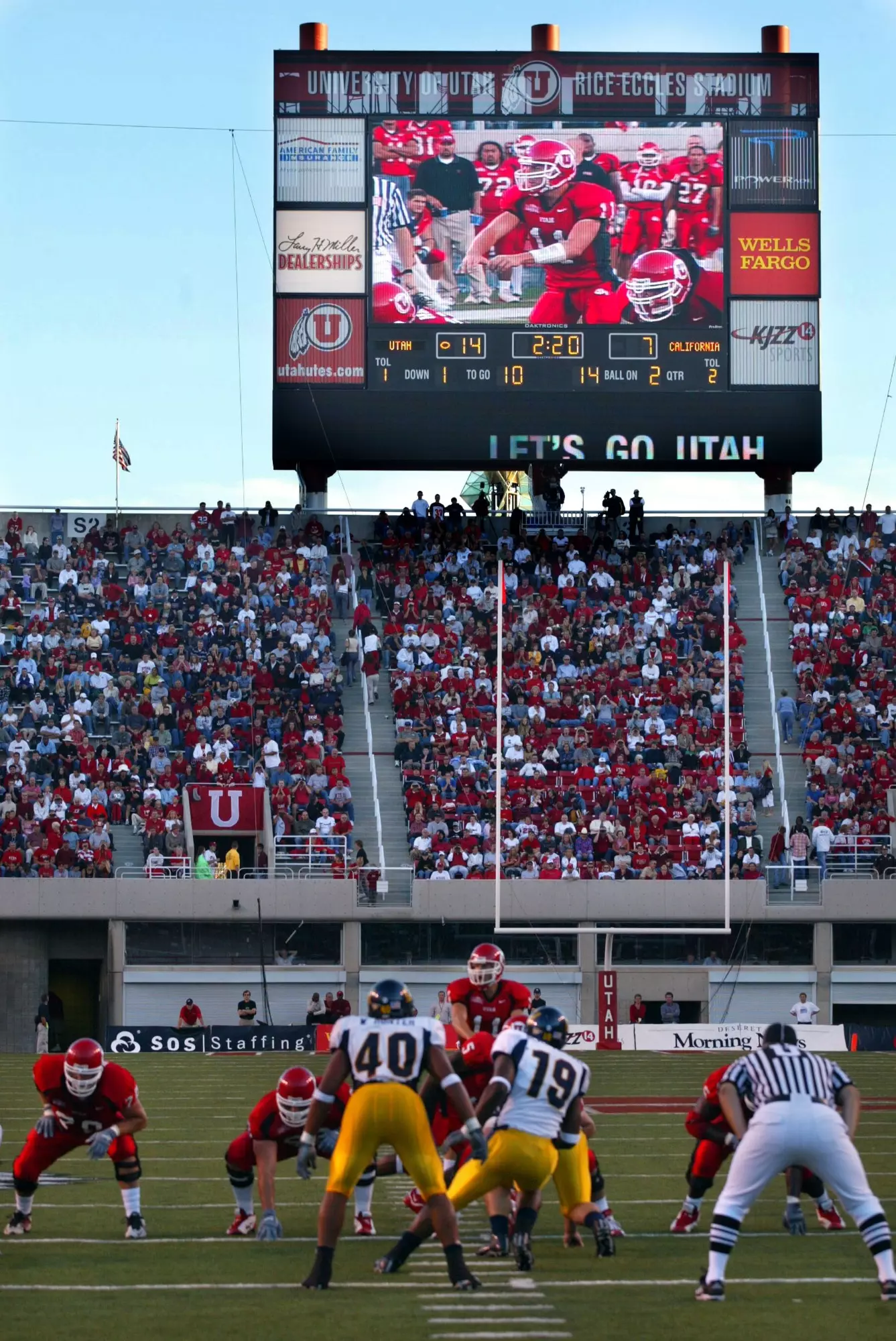
2003: Smith vs. Rodgers
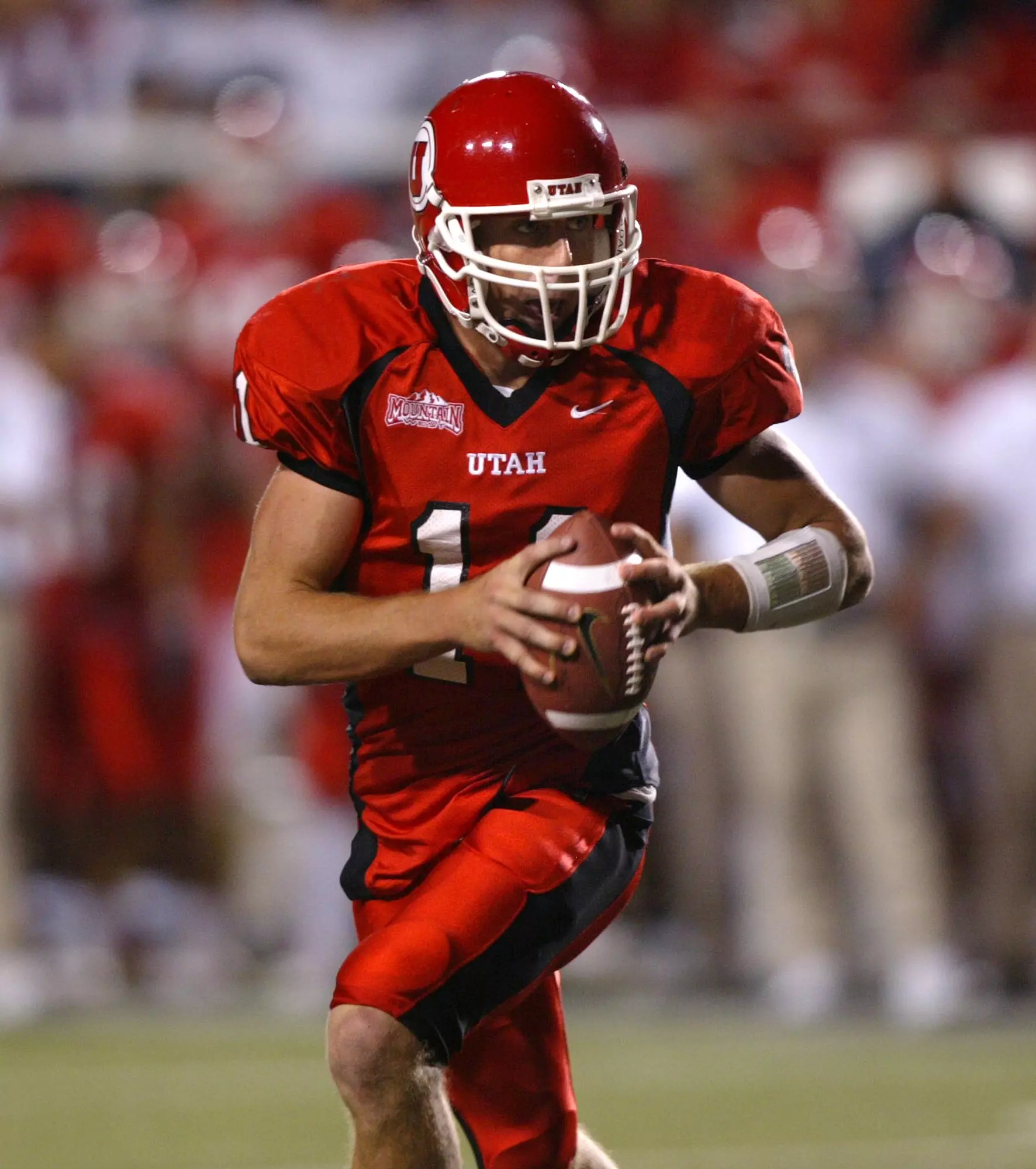
In a game played before what was then another record-setting crowd, Utah held off a late Cal comeback effort and took down the visitors, 31-24. Not only did the game pit the Utes against a future Pac-12 Conference foe, it matched up two future NFL quarterbacks in Alex Smith and Aaron Rodgers.
2004: BCS Busters
Then playing in the Mountain West Conference, the Utes owned a handful of wins over schools from what are now known as the Power Five conferences. They took down Cal and Oregon in 2003, Indiana in 2001 and ‘02, Washington State in 2001 and Louisville back when Rice-Eccles opened in 1998. Something special was in the works.
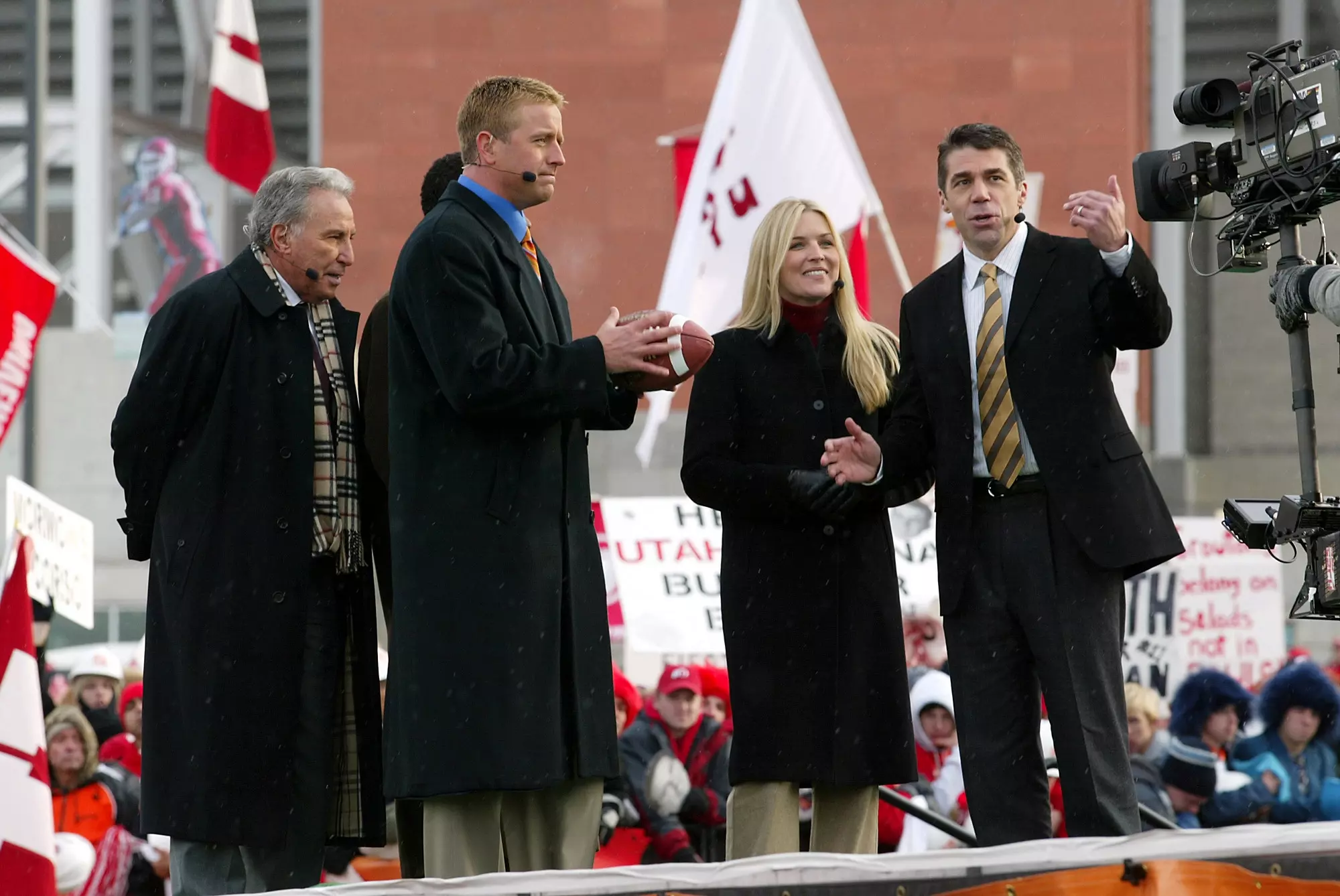
The 2004 season opener? Same thing. Alex Smith threw for three touchdowns and ran for two more in a 41-21 triumph against Texas A&M. The W’s at home continued against Air Force, North Carolina, UNLV and Colorado State. With the Utes getting it done on the road along the way, ESPN’s College Gameday took notice and broadcast from Salt Lake for the regular season finale vs. BYU. If the Utes won that night, it was all but certain a Fiesta Bowl berth was secured.
The first sign of good things to come; unanimous picks on the Gameday set for the Utes. Swoop was Lee Corso’s headgear pick, Kirk Herbstreit donned a sombrero hat and Chris Fowler tossed Tostitos toward the camera.
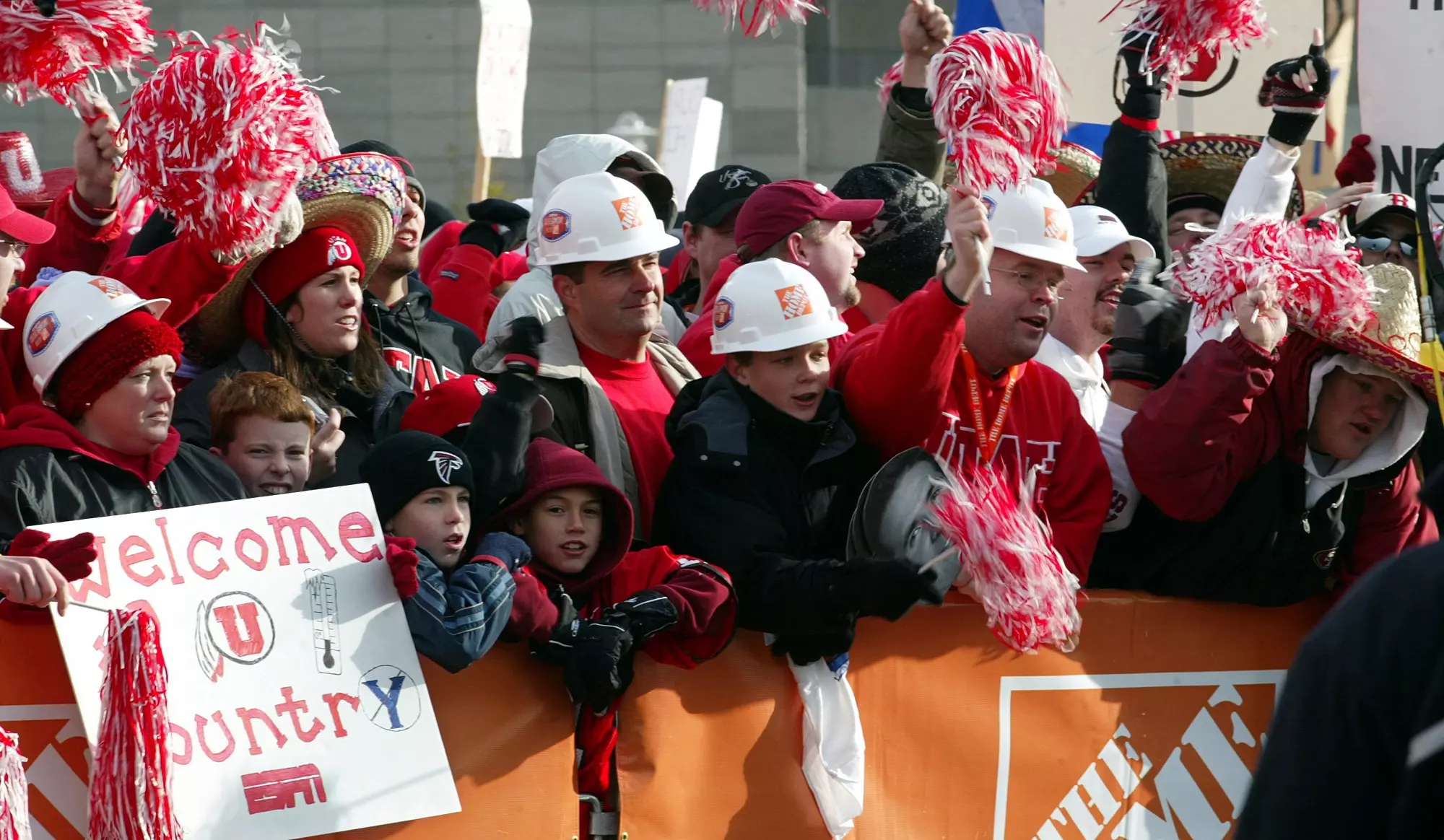
As the clock hit all zeros in the ballgame that night, fans wore their own sombreros and poured onto the field, celebrating a 52-21 rout that positioned the Utes as the first team from a mid-major conference to break into the BCS.
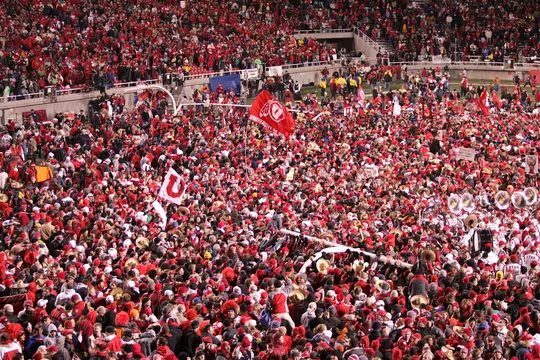
They went on to run past Pittsburgh in the Fiesta Bowl, 35-7, on Jan. 1, 2005 in a game co-coached by Urban Meyer and Kyle Whittingham.
2008: BCS Busters (again)
With Whittingham taking the reins in 2005, he soon orchestrated a team of his own that would run the table. It was 2008 when the Utes put together a perfect 13-0 season, culminating with a triumph over Alabama in the Sugar Bowl.
To climb the BCS Busters mountain this time, the Utes had to get past No. 11 TCU—one of many classics to be played in Rice-Eccles over the last quarter century. Utah, ranked No. 10 at the time, trailed for most of the game. But quarterback Brian Johnson put together a nine-play drive in the final minutes, capped with a Freddie Brown touchdown. Just 48 seconds remained as the Utes hung on, 13-10.
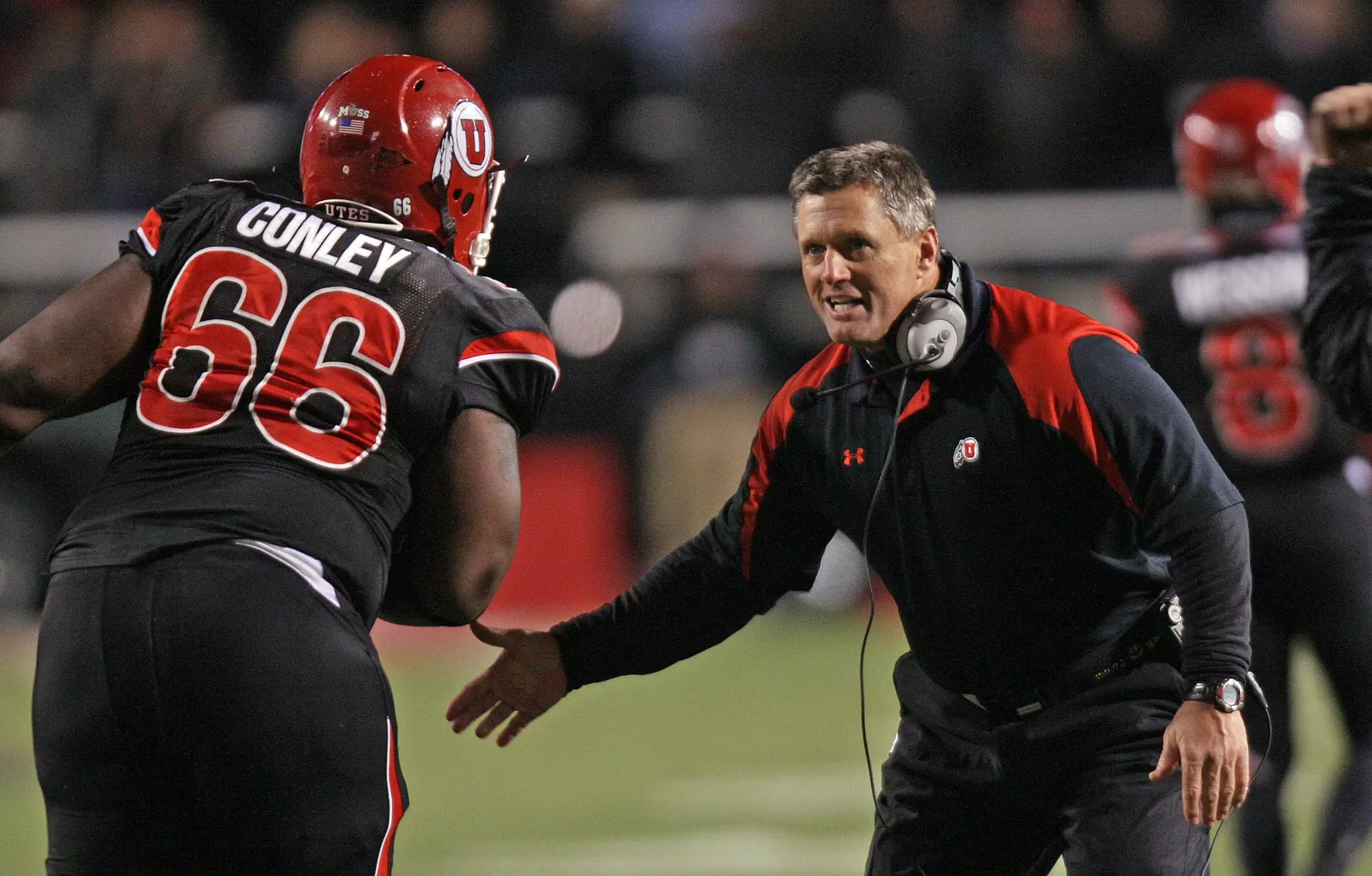
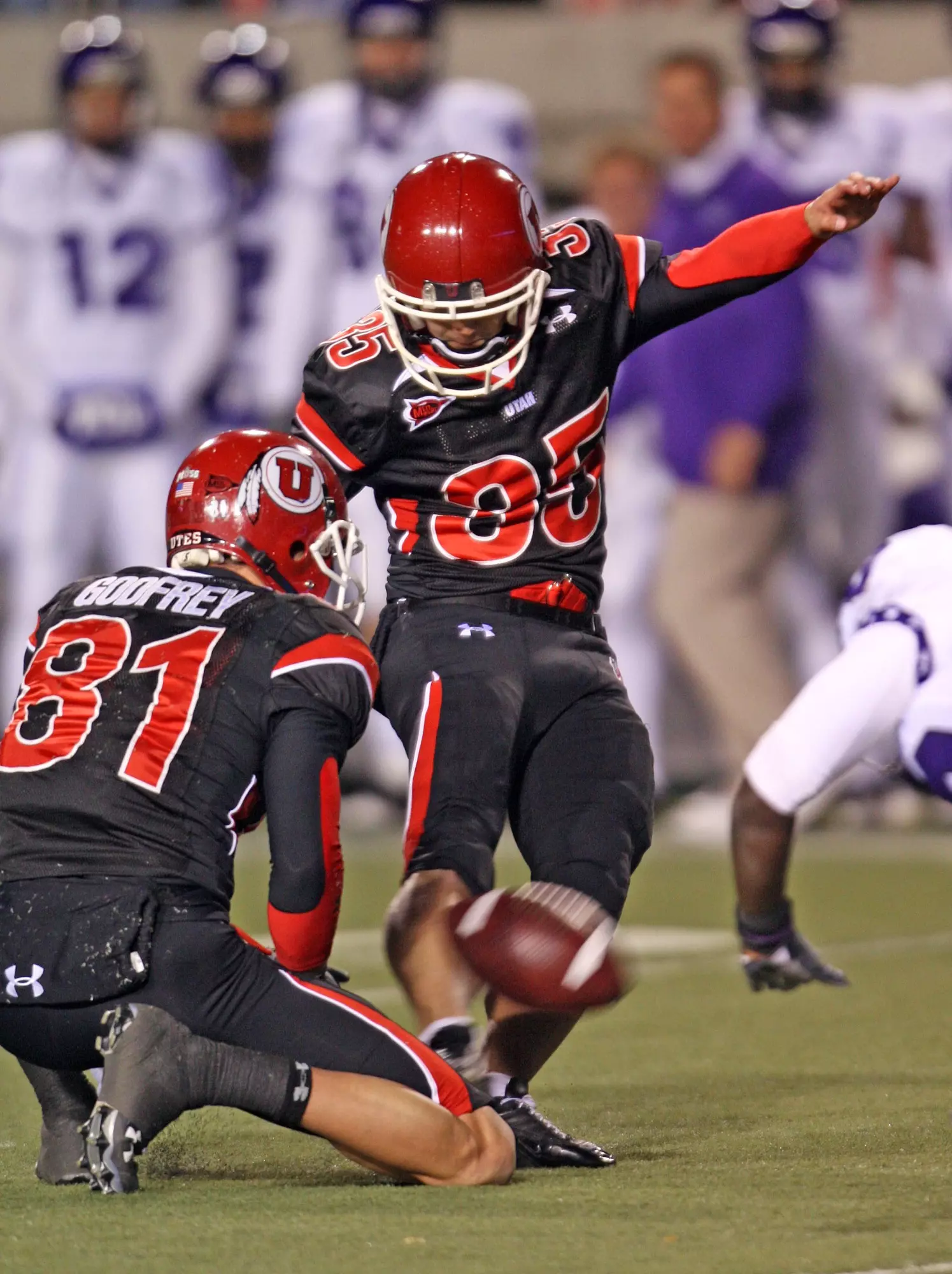
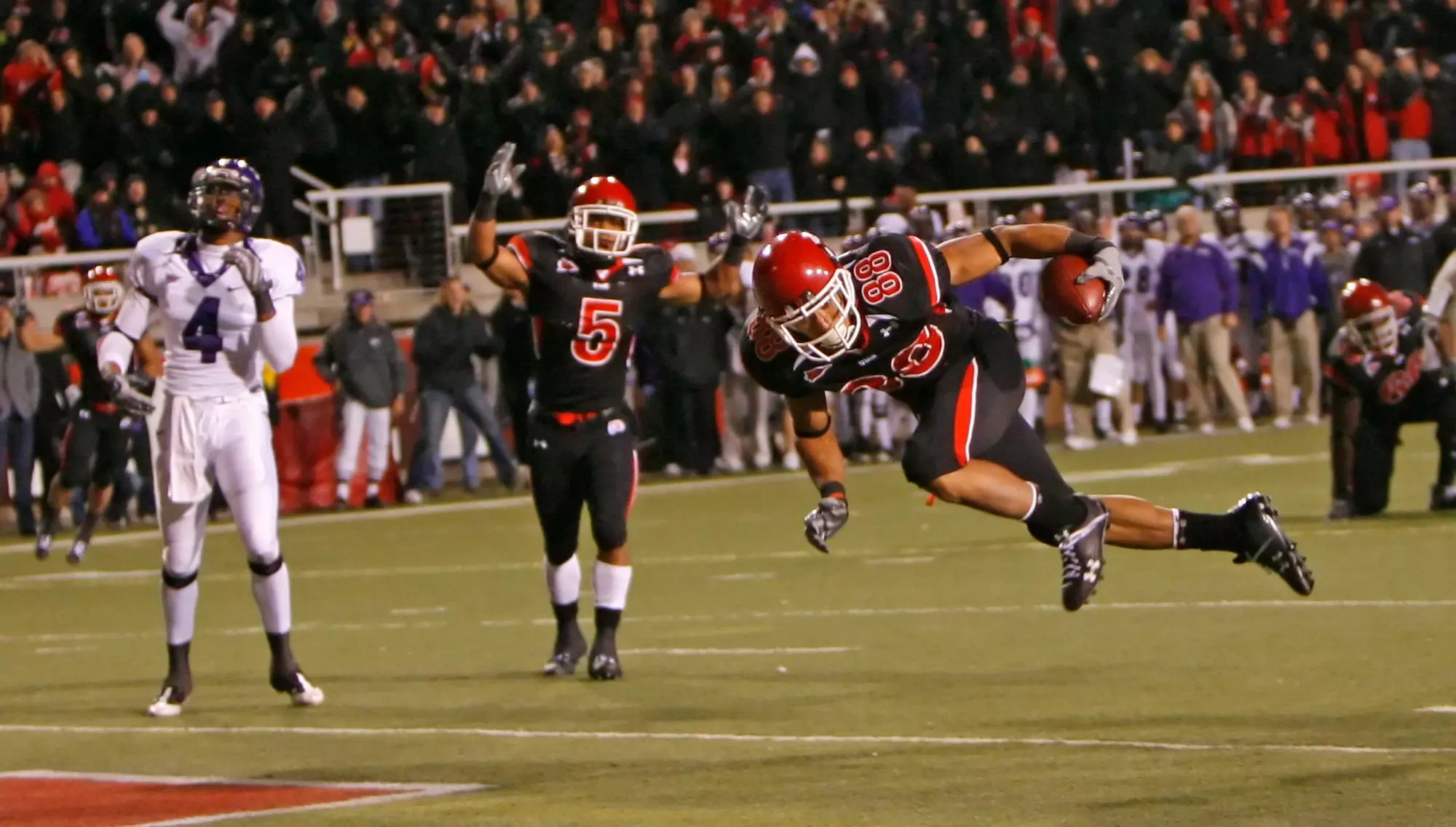
The TCU game was a challenge conquered, but the Utes had one more order of business to cap a perfect home slate: BYU. Not only was a big-time rivalry on the line, so too was the Mountain West championship.
Johnson passed for 303 yards, while the defense racked up five interceptions in a 48-24 win over the Cougars. The undefeated regular season was secured, and Utah was Sugar Bowl-bound.
June 2010: Ten Becomes Twelve
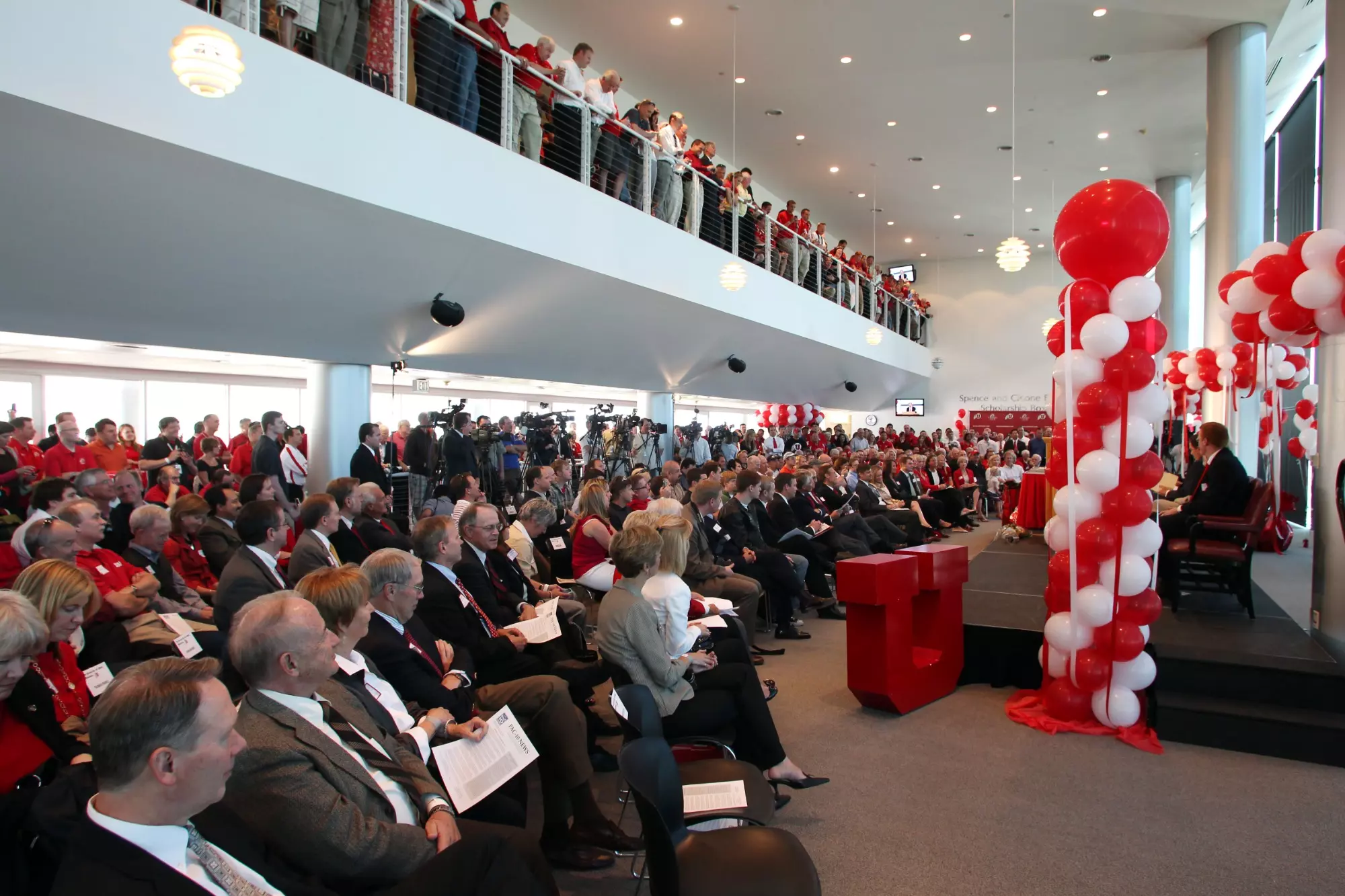
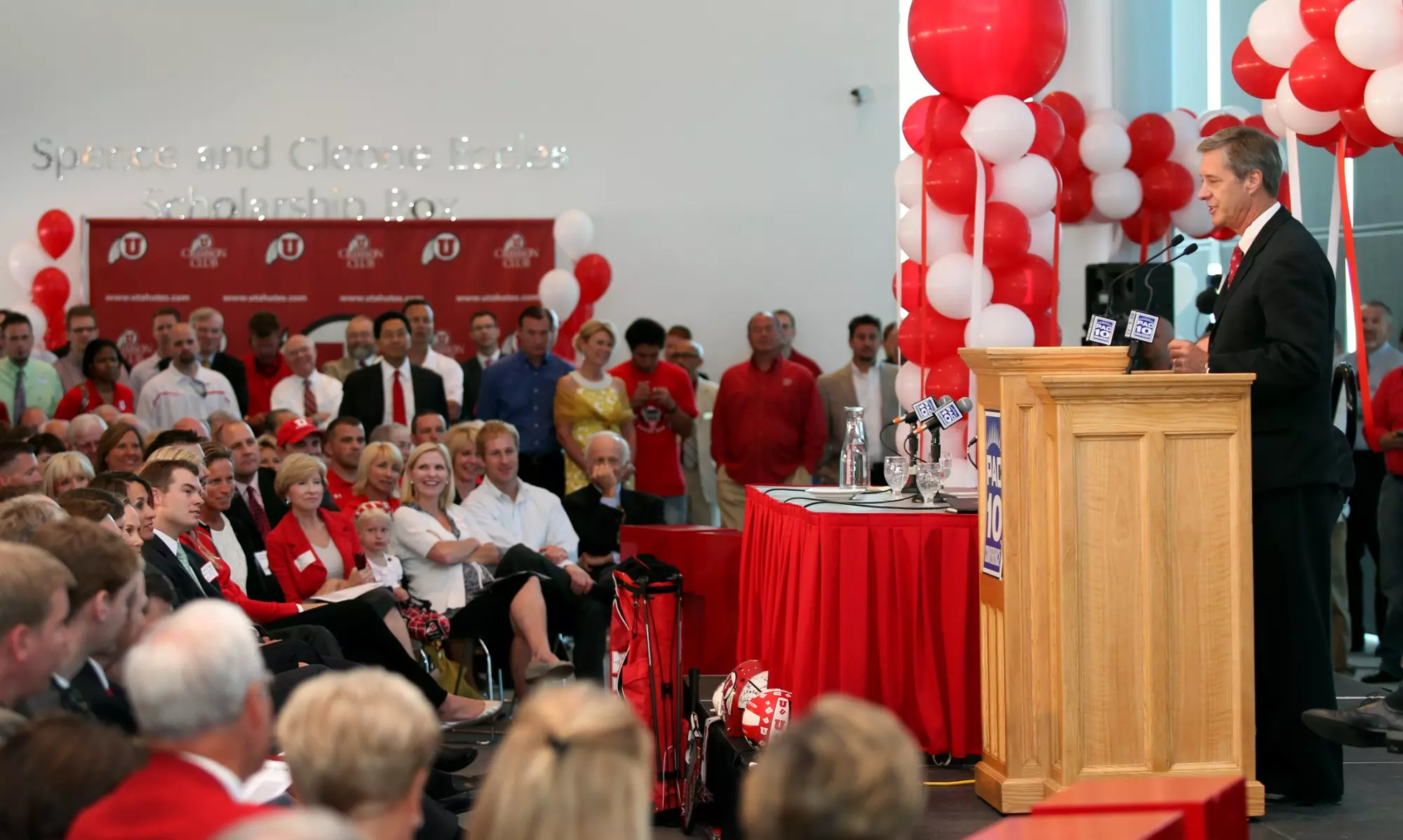
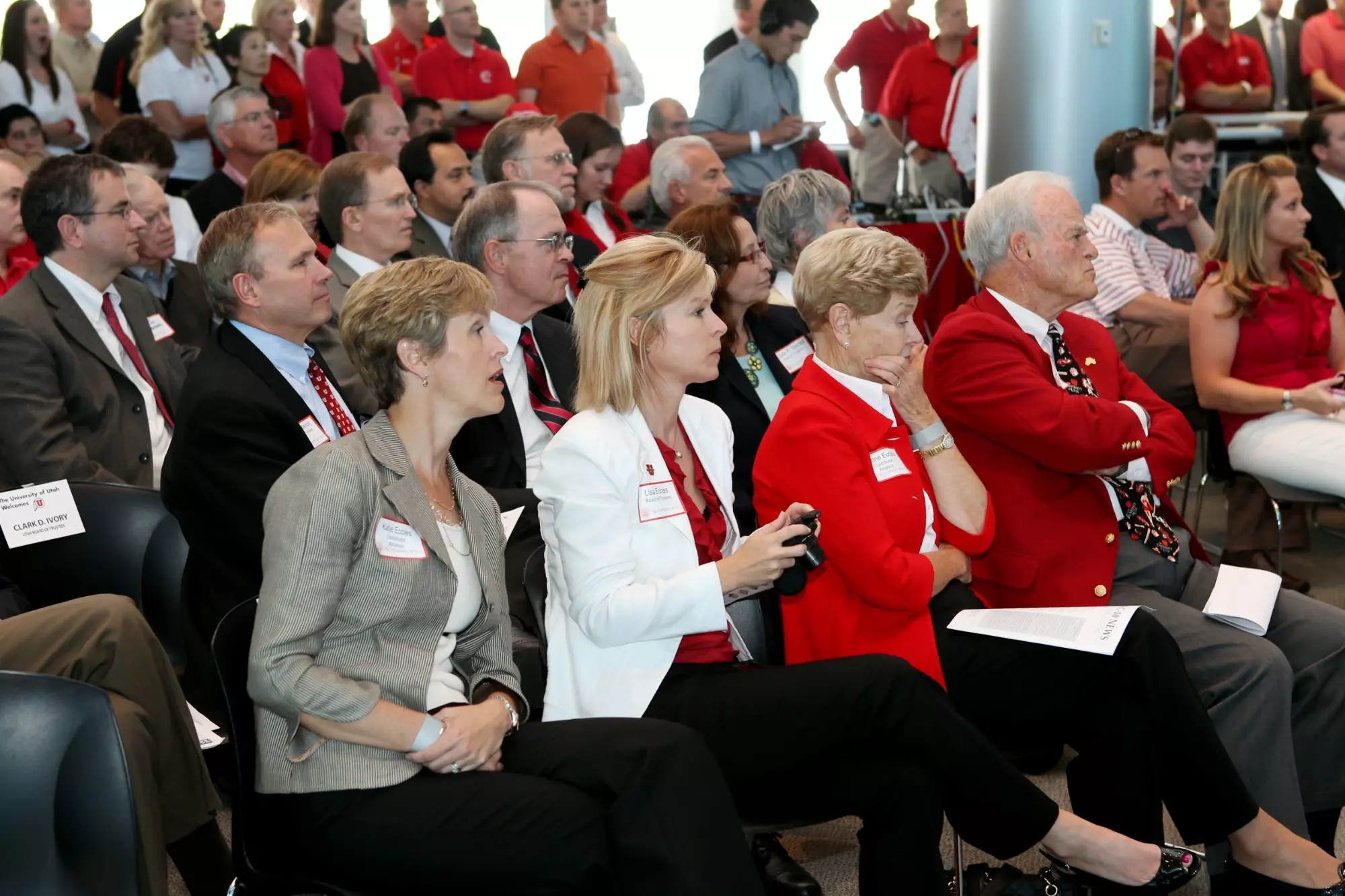
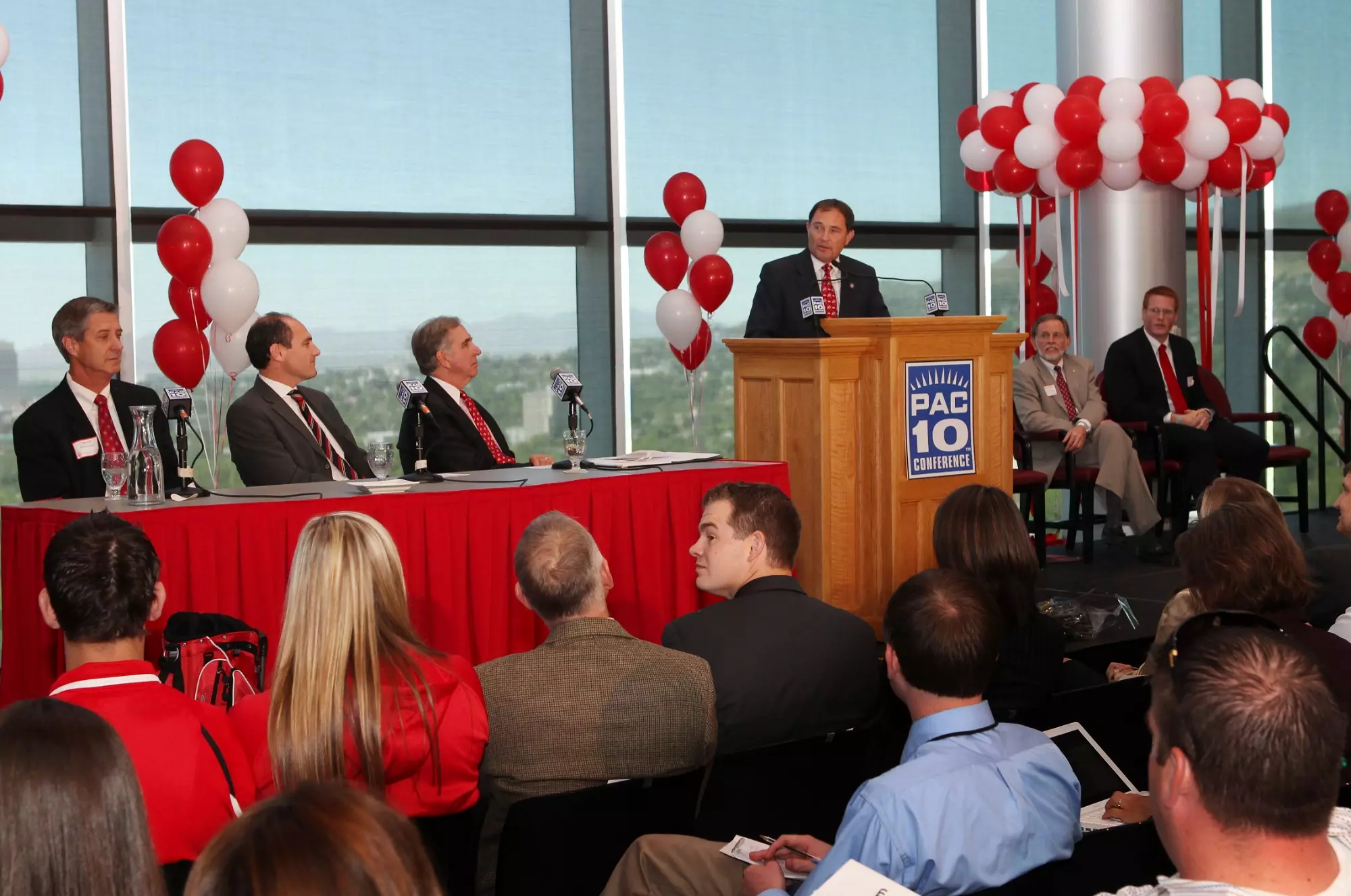
Utah officials called a press conference for 1 p.m. on June 17 in Rice-Eccles Stadium. Dignitaries from what was then the Pac-10 Conference were expected to be in attendance.
While the football stadium was the host of this historic event, a new chapter was coming in the history of all teams at Utah: the Utes (along with Colorado) had accepted an invitation to join what would become the Pac-12 Conference.

September 2010: The Streak Begins
With Utah set to join the expanded Pac-12 in 2011, the Utes kicked off their final season of Mountain West football by hosting Pitt. A capacity crowd of 45,730 watched Utah take down the Big East and No.15-ranked foe that night.
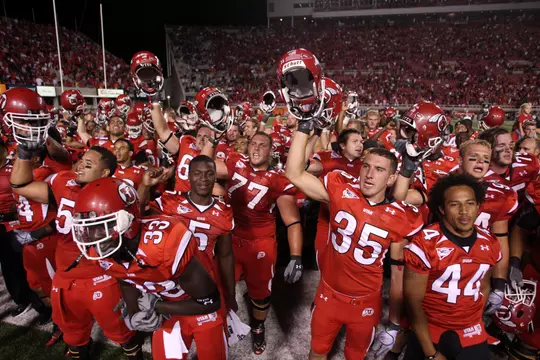
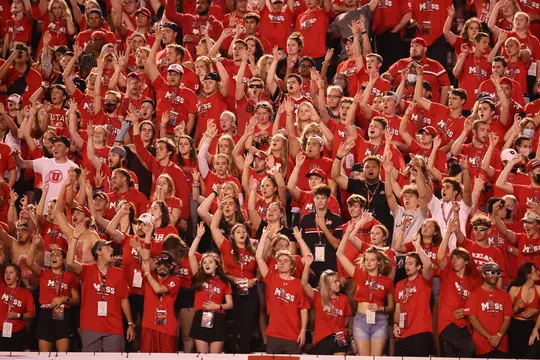
It was the start of a run that continues to this day: excluding the pandemic-shortened season of 2020 when games were played without fans, the Utes have played in front of sellout crowds in 74 straight games. Twelve years later, this Saturday’s tilt with Arizona will mark the 75th straight sellout at Rice-Eccles Stadium.
A Decade of the Pac-12
Although the Utes experienced their share of growing pains during the first few years in their new conference, Rice-Eccles has nevertheless hosted plenty of classics.
2012: BYU
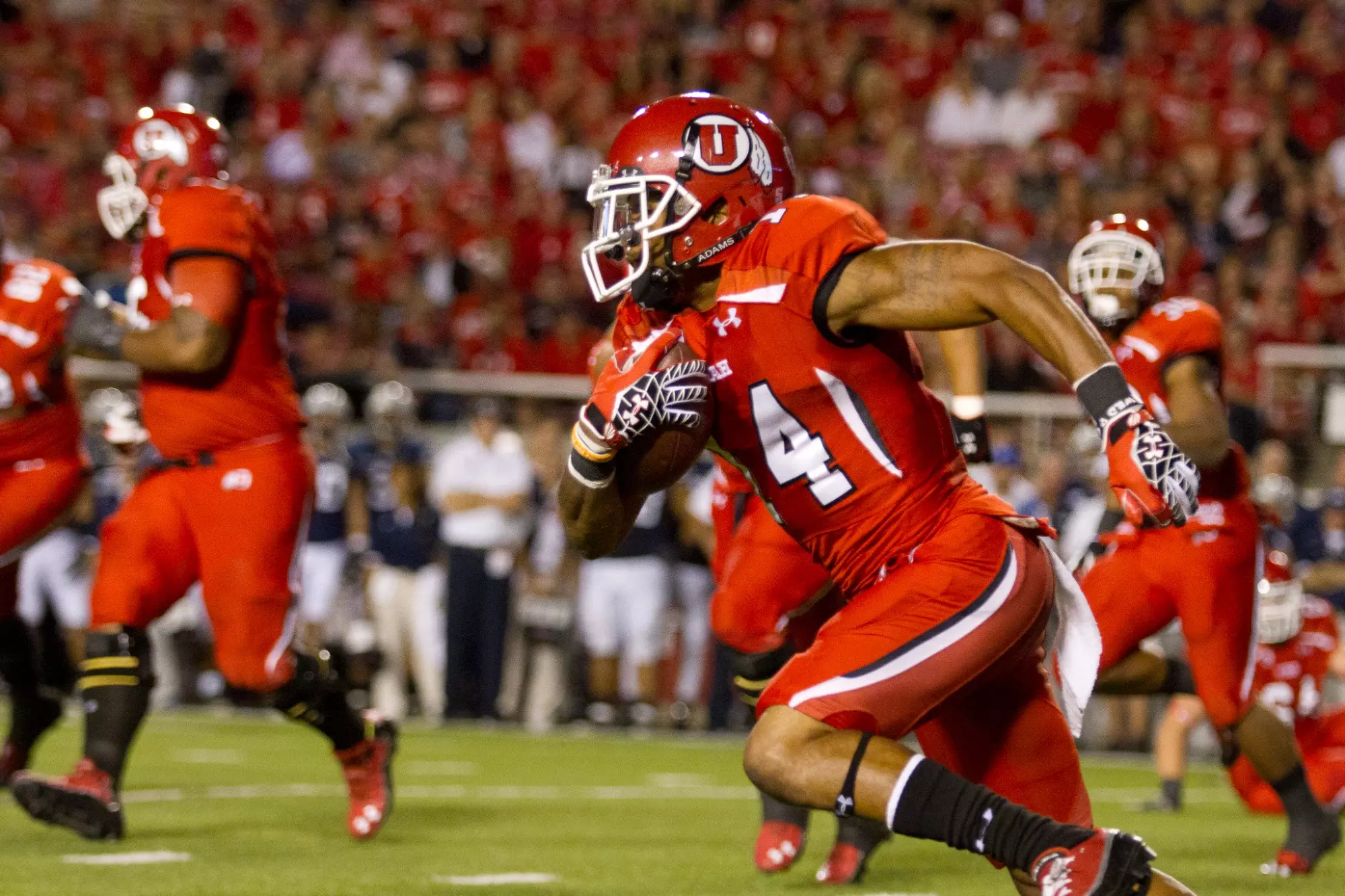
Any Utah-BYU matchup is almost guaranteed to be intense and come down to the wire. No different was the evening of September 15.
In a game that had a wild finish - three times, as a matter of fact - the Utes held off one last game-tying field goal attempt as time expired for a 24-21 triumph.


2013: No. 5 Stanford
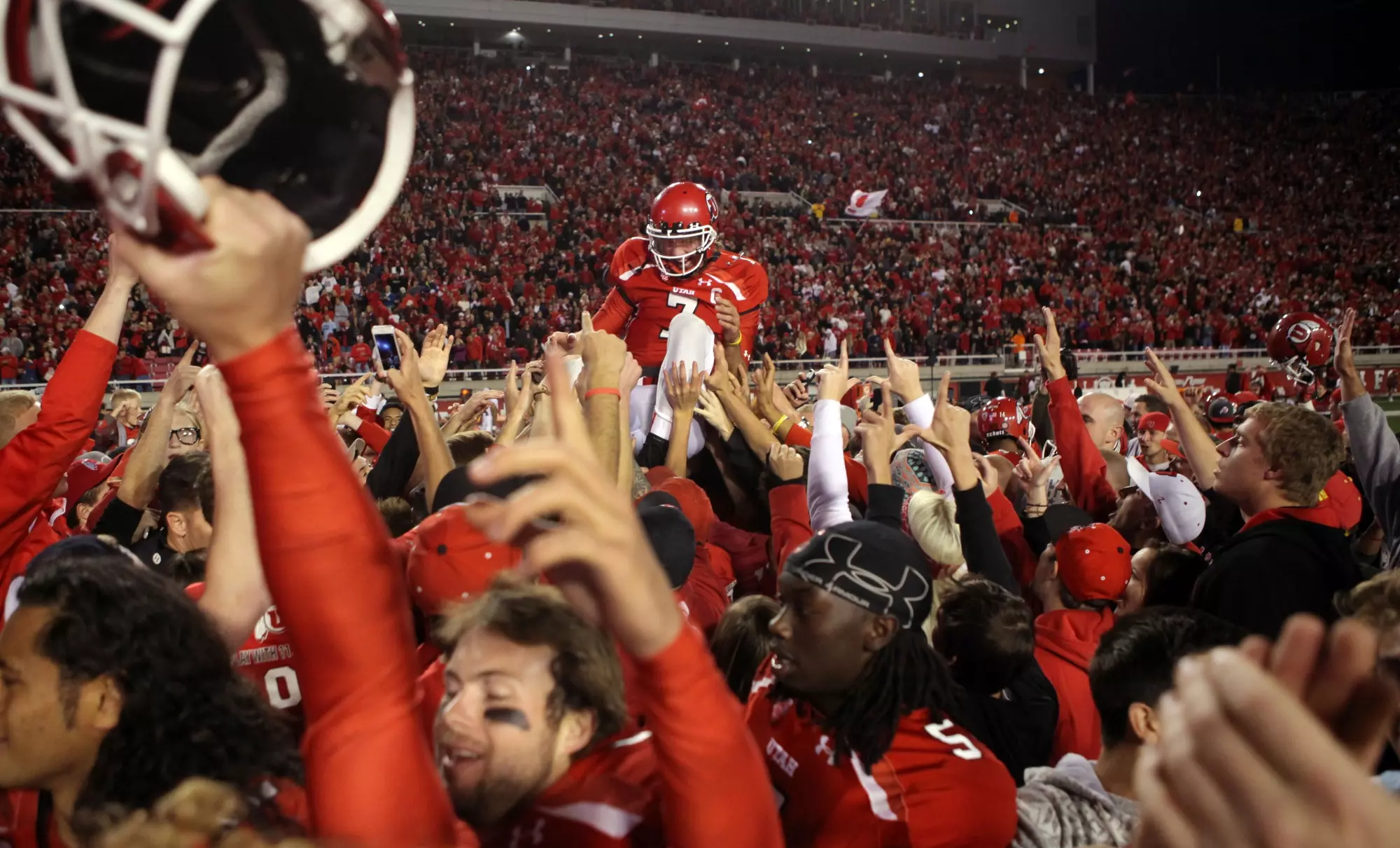
One of the first “signature” wins of the Pac-12 era, the Utes took down a top-five ranked opponent for the first time ever inside Rice-Eccles Stadium. Travis Wilson passed for 234 yards and two touchdowns, and Trevor Reilly had seven tackles in the 27-21 final.
Stanford marched down to the Utes’ 6-yard line on its final drive, but Utah forced two incompletions to seal the win.


2014: No. 20 USC
Wilson hit Kaelin Clay on a one-yard touchdown pass with just eight seconds left. It marked a milestone game for Wilson as his 192-yard passing effort made him the 12th player in Utah history to throw for over 4,000 yards in his career.


2015: Michigan
Another then-record-setting crowd of 47,825 came out to see Utah battle Michigan in Wolverines head coach Jim Harbaugh’s first game at the helm. Three Utes had interceptions in the 24-17 victory, including a 55-yard pick-six from Justin Thomas.
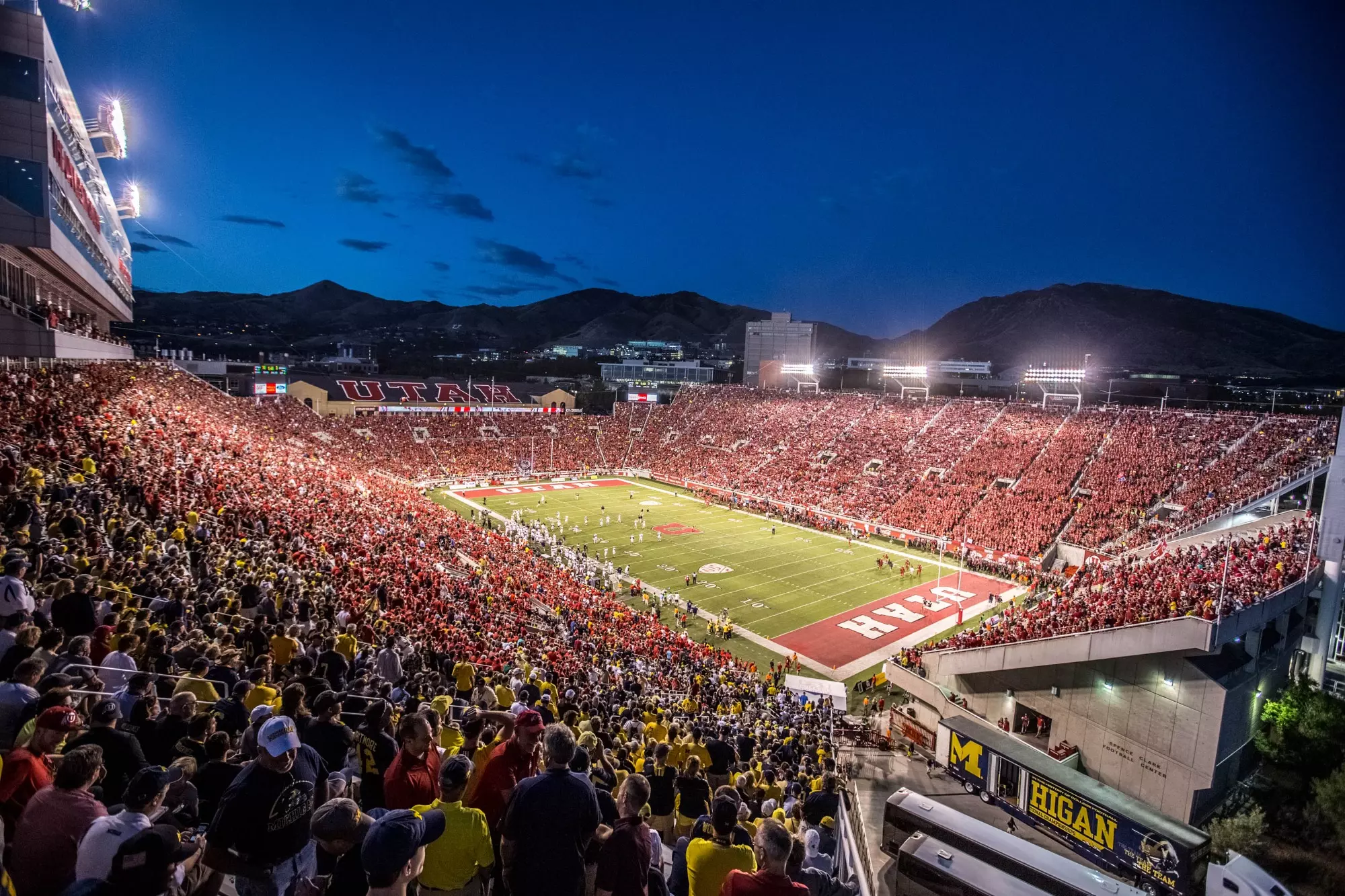


Britain Covey led the team with 58 yards on five catches in his first game as a Ute. Before the Rose Bowl almost seven years later, Covey would joke that he played both his first and last games at Utah against Big Ten teams.
2018: BYU
In full honesty, this one wasn’t looking good early on. The Cougars had a 20-0 lead at halftime, leaving Utah with work to do coming out of the break.
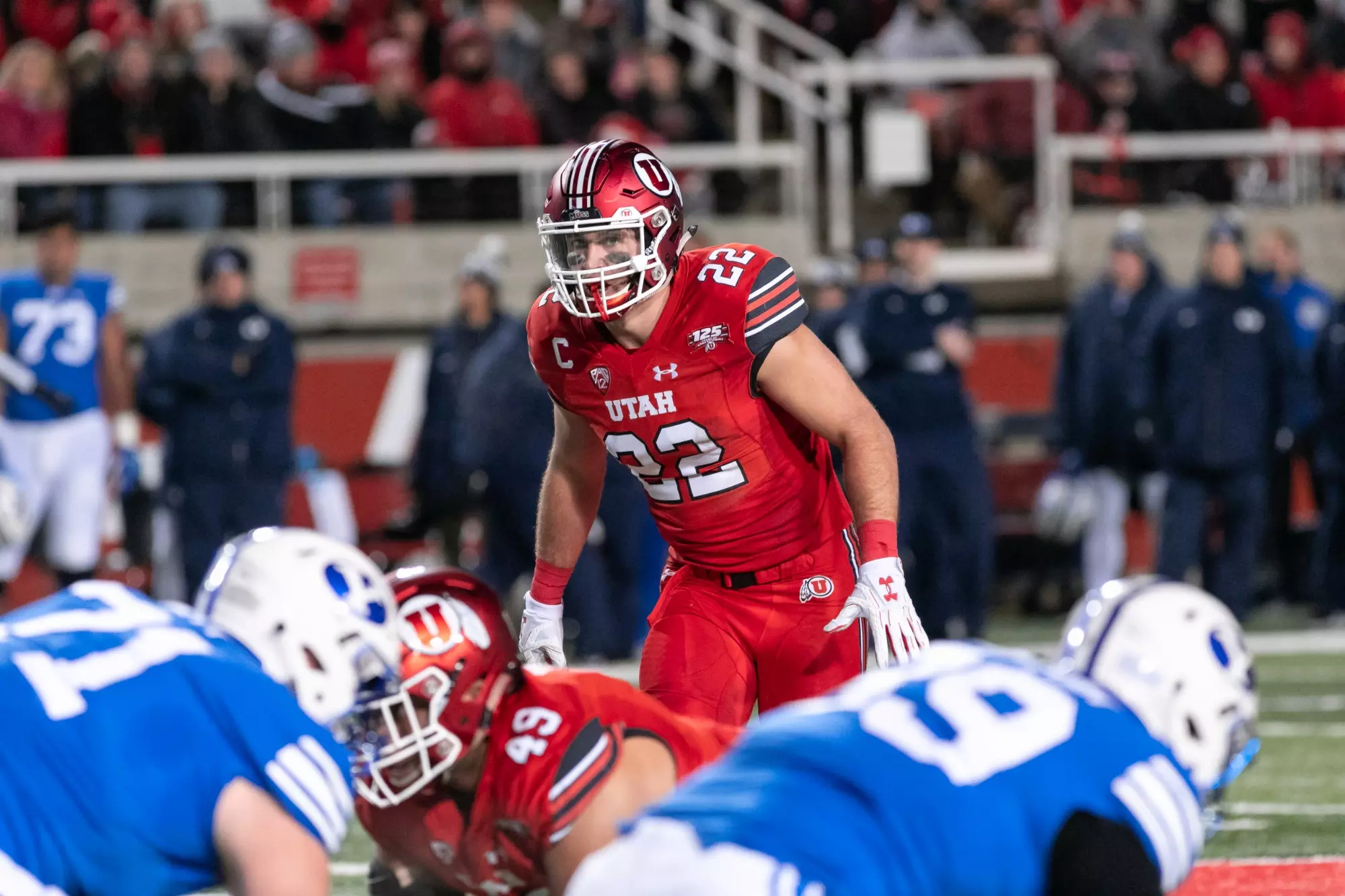
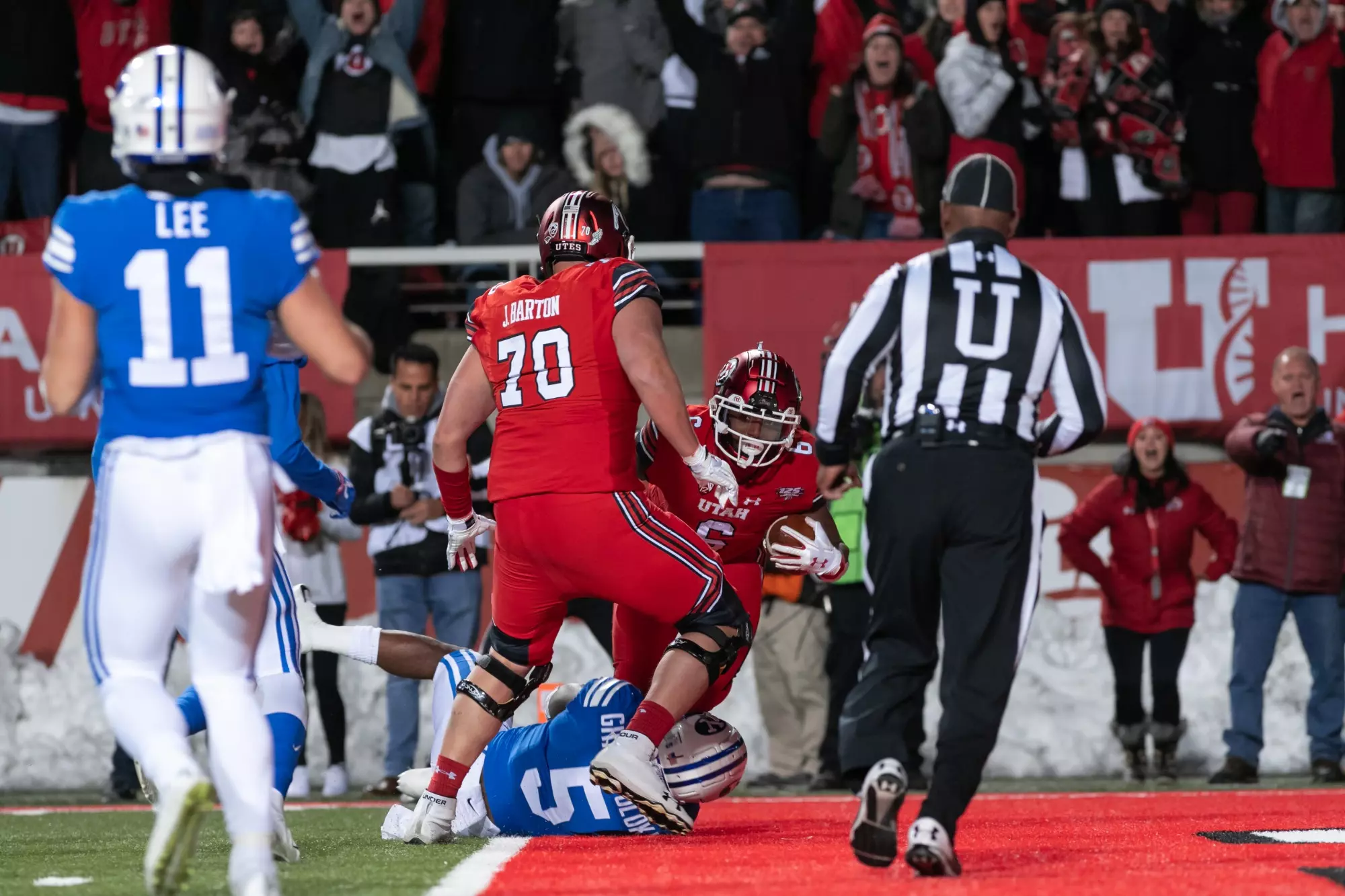
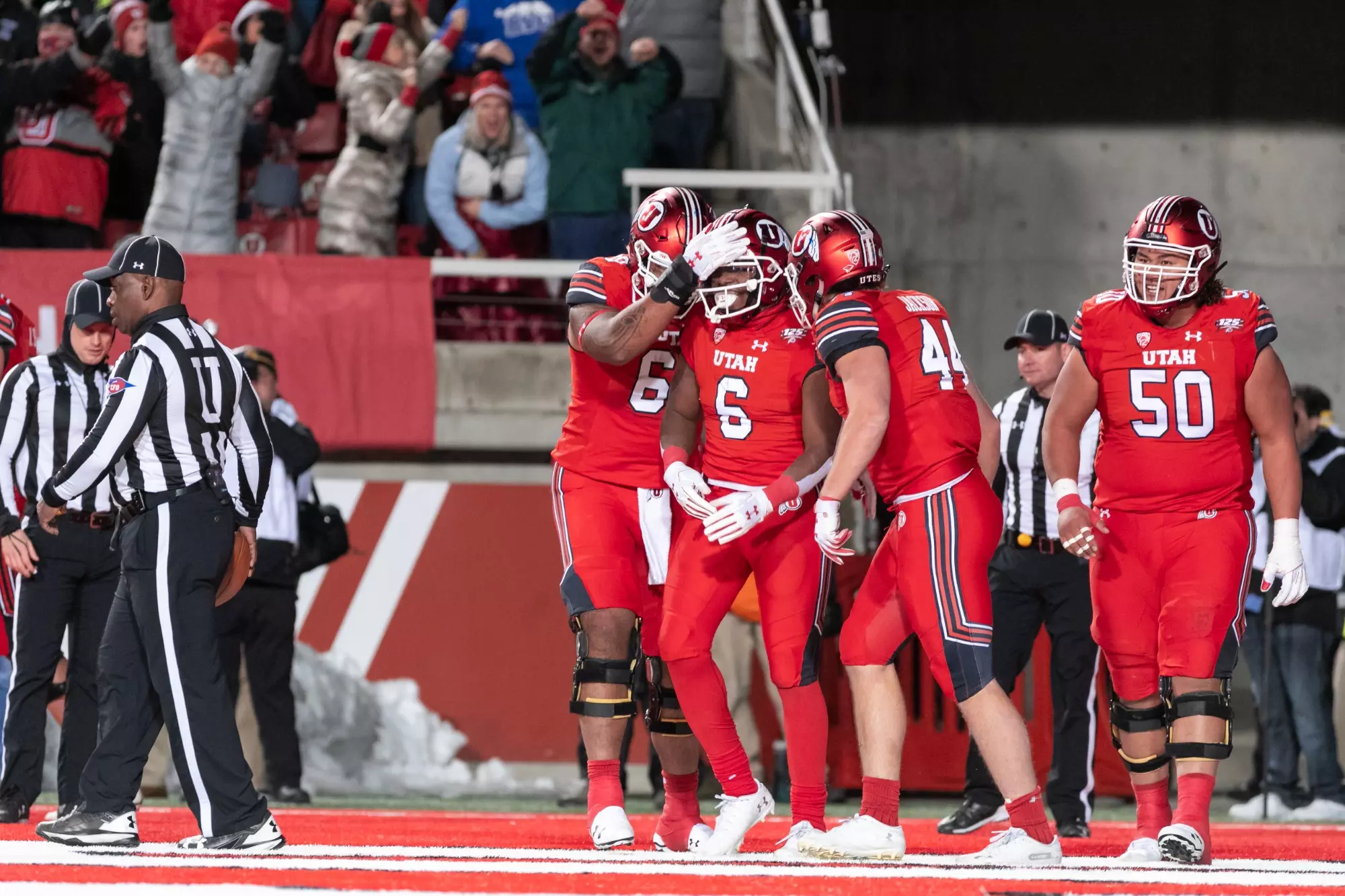
But as is usually the case in the Utah-BYU rivalry, it came down to the end, and Utes fans went home happy that night after braving the chilly November weather. In what remains the fourth-largest deficit the Utes have ever overcome in a win, Utah scored 28 unanswered points in the second half on the way to a 35-27 dub. Armand Shyne rushed for what proved to be the game-winning touchdown and Chase Hansen went off for 13 tackles in the game.
2020: Washington State
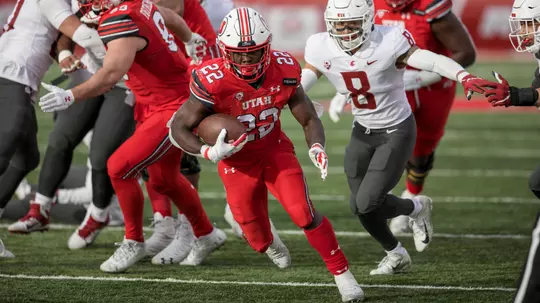
In another tale of two halves, this time with Utah trailing by 21 points, Ty Jordan was the star of the comeback with three second half rushing touchdowns. In a pandemic-altered season where the Utes largely played without fans in the stands, this game was special as a small contingent of family and friends were able to watch.
2021: No. 3 Oregon
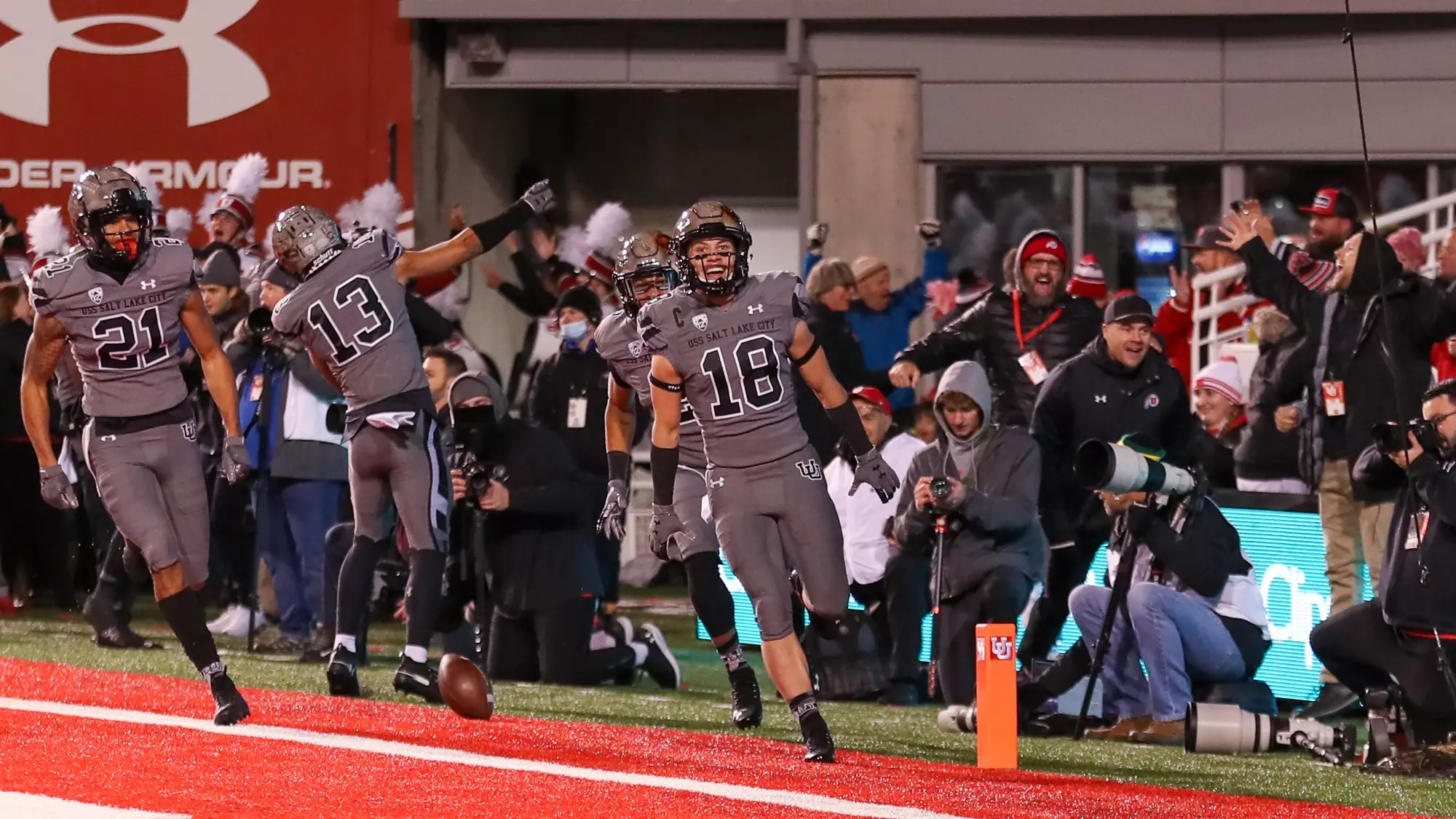
The 2021 Utah football season was defined by many as the epitome of courage. Following the tragic losses of Ty Jordan and Aaron Lowe, the Utes strived to be 22-percent better each and every day. The team’s optimism and passion for football were evident each week, but especially during a Nov. 20 showdown against the Ducks.

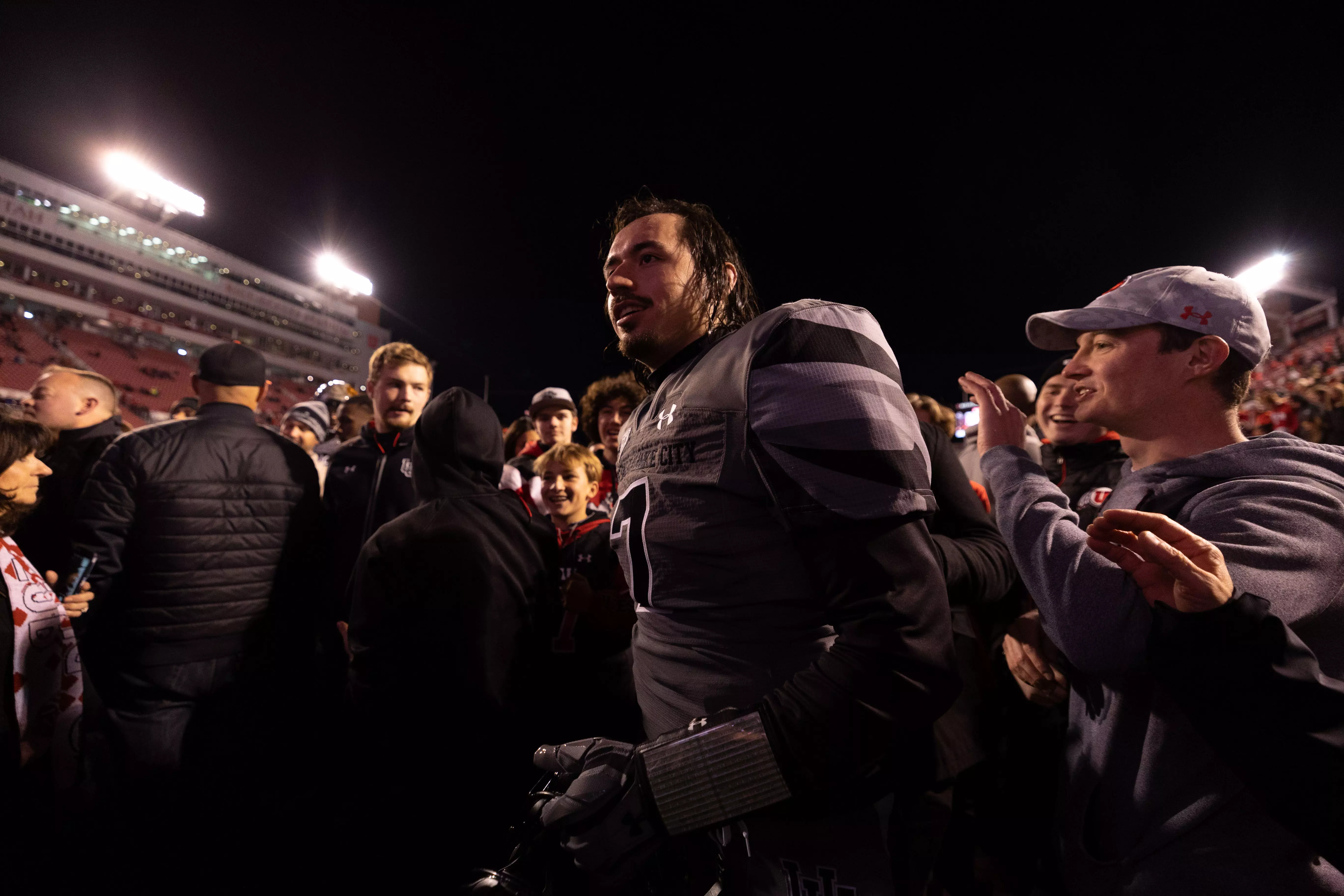
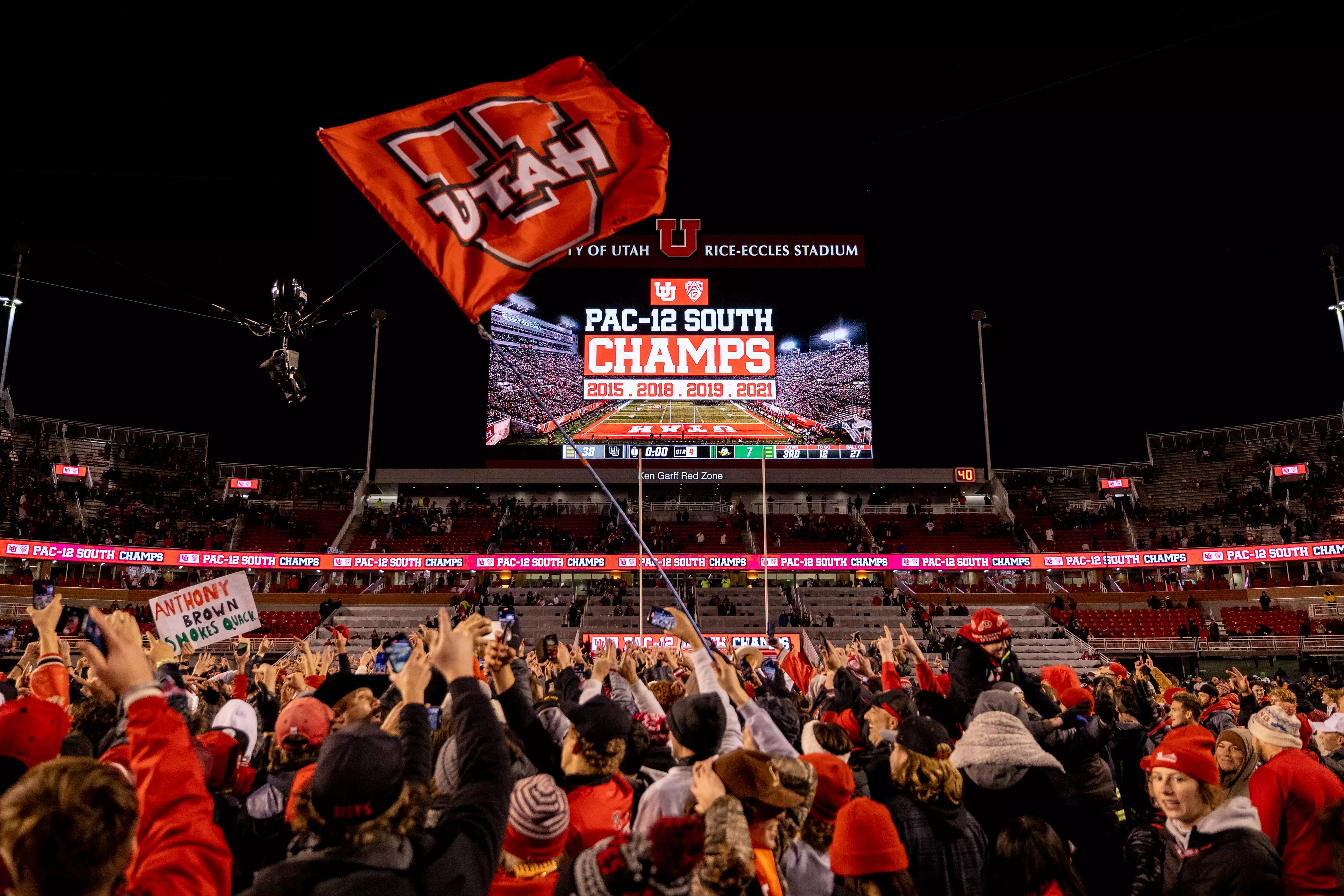
This game was never in doubt—and if anyone felt otherwise, that doubt was erased when Britain Covey closed out the first half with a 78-yard punt return touchdown. Oregon was kept off the scoreboard until the third quarter as the crowd of 52,000-plus saw a Pac-12 South Division championship clinched and head coach Kyle Whittingham become the winningest coach in Utah football history.

2022: No. 7 USC
After the Rose Bowl vs. Ohio State, it seems like almost immediately people circled Oct. 15, 2022 on their calendars. Utah vs. USC in Salt Lake City.
Utah trailed for much of this game, but as the old saying goes: it’s not how you start, it’s how you finish.
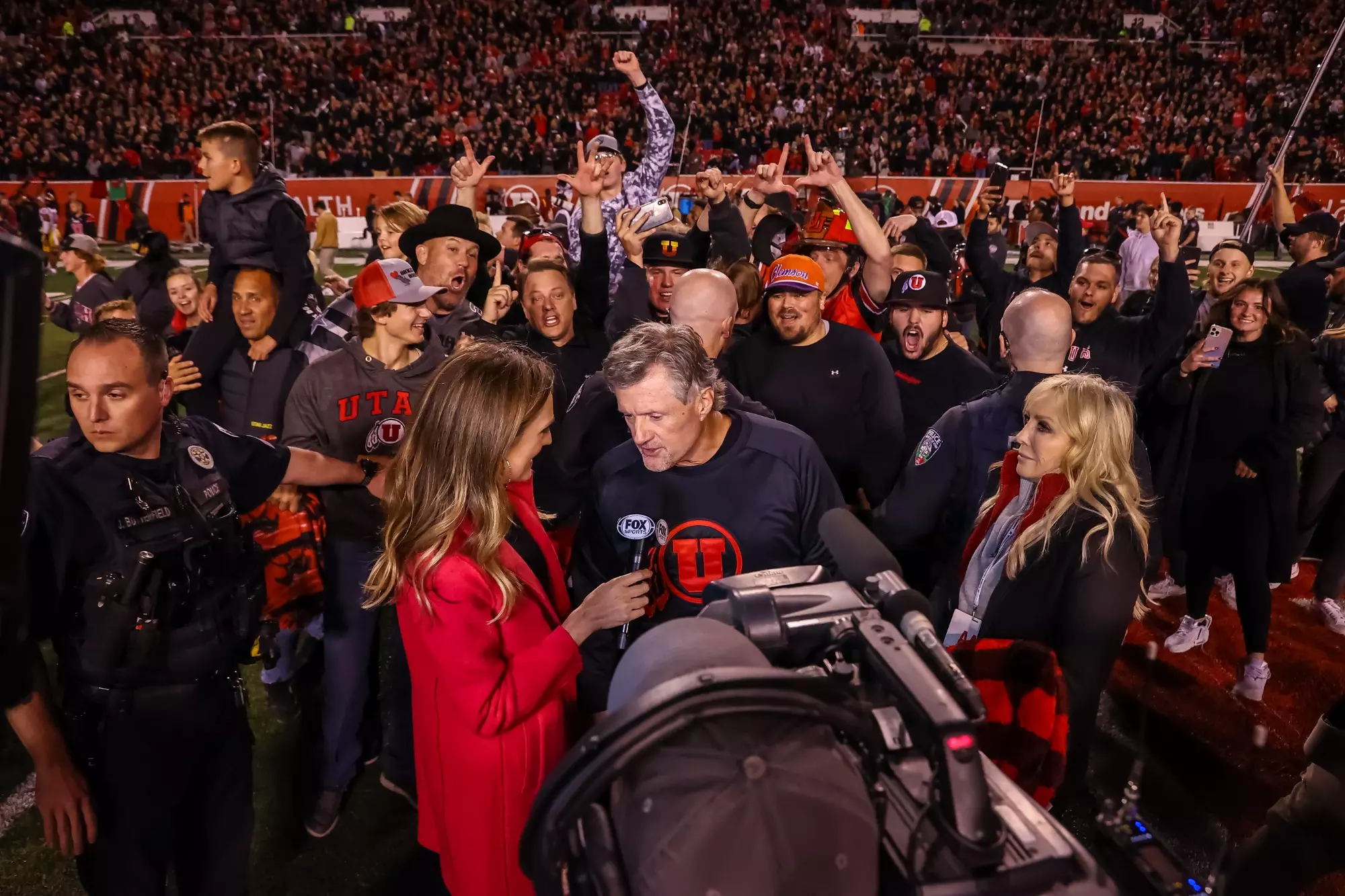
With a FOX primetime television audience watching, Cameron Rising threw for 415 yards and rushed for 60 more, culminating with a one-yard scamper into the end zone and just 48 seconds on the clock. Moments later, Rising darted back across the goal line for the two-point conversion, putting the Utes ahead, 43-42, and sending the record crowd of 53,609 into an absolute frenzy.
Dalton Kincaid racked up 234 yards in catching all 16 targets from Rising—the second-most receptions in a game by a tight end in recorded college football history.