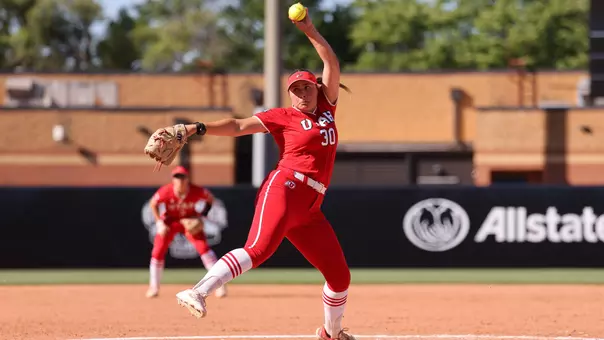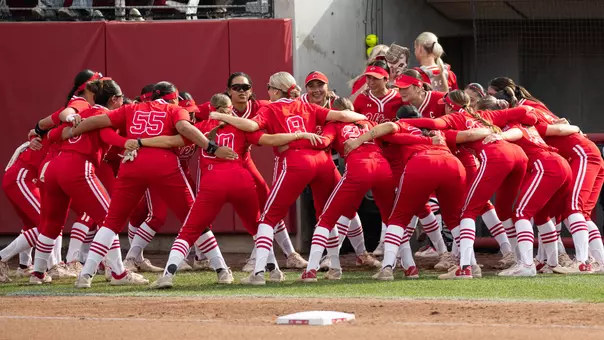

Completed Event: Softball versus No. 2 Seed Oklahoma State on May 7, 2026 , Loss , 0, to, 7
Final Score

Softball
0
vs No. 2 Seed Oklahoma State
7
3/6/2003 12:00 AM | Softball
March 6, 2003
By: John Butler, Specialty Reporting Class
Mona Stevens' forces go into games with high tech equipment. The old hickory bats struck out to composites, mitts are specialized for each position, and by the way there is nothing soft about the softball.
Bats have undergone a dynamic revolution from the first wooden bats that players used in the early 1900s. Now, not only are most bats made of metal, but most are a composite of several different materials technologically combined to create the greatest hitting power possible.
In August 2002, the players on the world's best softball teams, comprising of Dan Smith, Menosse, Backman and Easton, were given samples of a new Easton composite bat just 24 hours before the ISA Super Majors. Every player on every team switched, Dan Smith went undefeated to win the national championship in four straight games by a combined score of 135-46, and a wildfire started."
You will notice the batters styling high impact Ute red helmets. They are made of hard plastic with some foam liner inside. Batting gloves help to give more grip to metal bats causing more control on where the player hits the ball.
Mitts are the first line of defense for the team in the field. When baseball and softball was first being played in the 1800s, players found that a larger hand could catch a ball more easily. Manufactures turned this observation into the innovation of flat leather gloves with a little protective padding, and this pattern grew in size over time to the mitt that players use today.
In modern softball, players require a specialized mitt for each of their positions. Outfielders require a mitt designed to easily scoop up a ball from off the ground and also have a deep pocket to keep caught balls in the mitt and in palm of the hand. First base mitts are larger than outfielder mitts, allowing more area to catch a ball and still be able to keep a foot on first base to get a player out. Catcher mitts are covered with padding, designed to protect the hand from injury from catching a fast pitch, but at the same time are flexible enough to close quickly to catch the ball.
With the Utes' throw balls over 70 miles per hour, a catcher's first defense against a missed catch would be the equipment. The obvious equipment consisting of a mask and chest protector dates back to the start of the sport. The leg guards cover from the knee to over the foot, guarding against knee injuries and ankle injuries from a missed catch. But all this equipment still doesn't mean a catcher is totally protected. "It hurts the worst to be hit on the thighs by a softball because there is no padding there," said Lynsey Wall, freshman catcher for the Utes.
The ball is about two times the size of a baseball and made of a cork center covered with white nylon. Don't let the name be misleading, the softball is not soft at all, it is actually harder than a baseball. The reason softball carries this name begins with football. On a blustery, windy day in November 1887 in Chicago, Illinois a bunch of Yale and Harvard alumni anxiously awaited the results of the Harvard-Yale football game inside the Farragut Boat Club. When the news came that Yale had defeated Harvard, 17-8, one Yale supporter, overcome with enthusiasm, picked up an old boxing glove and threw it at a nearby Harvard alumnus, who promptly tried to hit it back with a stick. This gave George Hancock, a reporter for the Chicago Board of Trade, an idea. He suggested a game of indoor baseball. Naturally, Hancock's friends thought he was talking about playing a game outdoors, not indoors. Hancock, however, wasn't kidding. Using what was available, he tied together the laces of a boxing glove for a ball and divided the players into two teams. The first softball game ended in a 41-40 score, and softball was born. It continues to be perfected each time the Utes take the field.